Om Shri Gurubhyo Namah, Jai Ma Adya, Jai Khyapa Parampara.
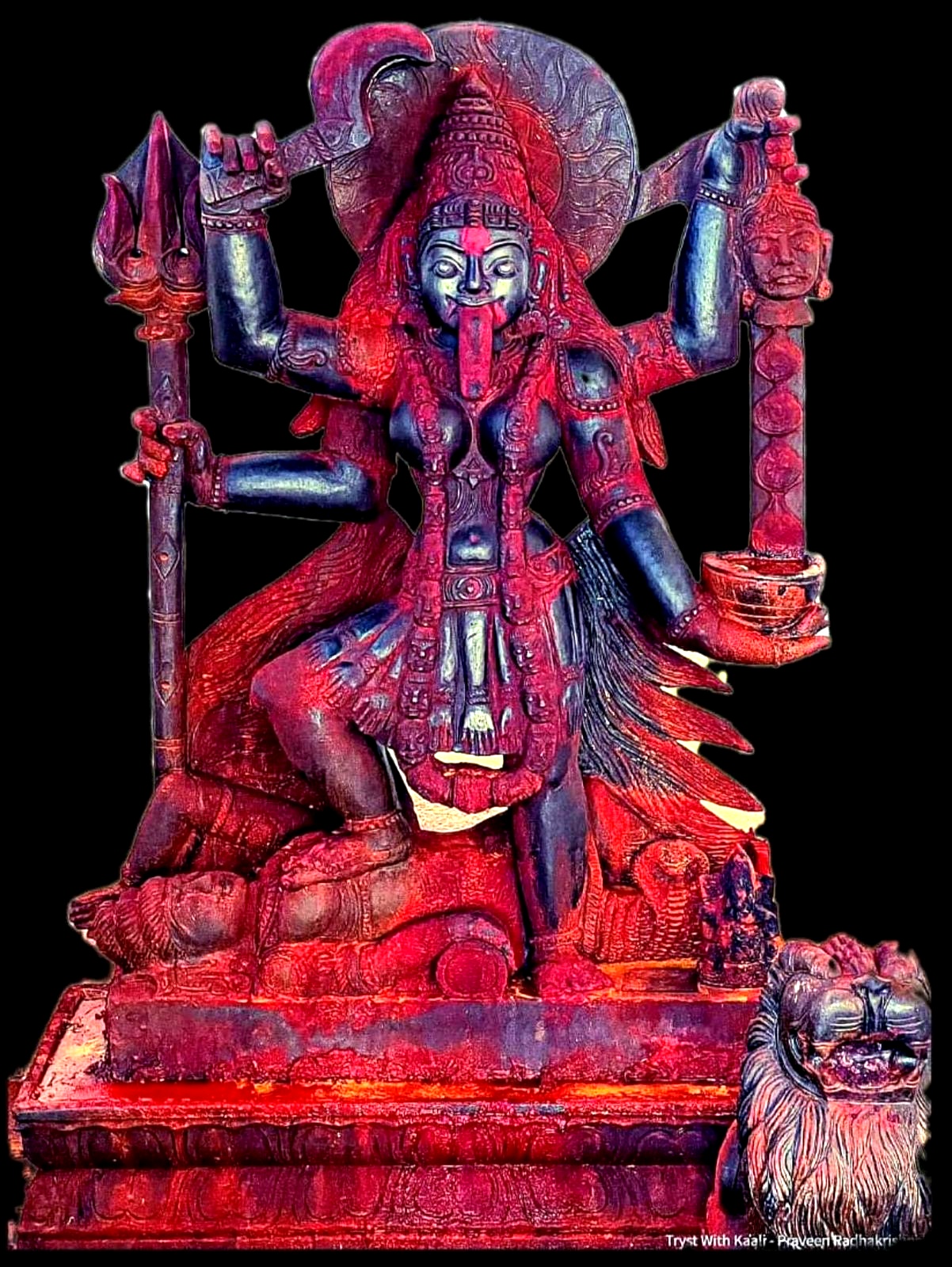
This page covers the final 112 names of the Kakaradi Kali Sahasranama, from 889 to 1000. Each name is followed by a short English meaning meant for prayer, japa, quiet study, and contemplation.
If you are reading the series in order, begin with Kakaradi Kali Sahasranama Names 1-111 with One-Line Meanings, then continue through Names 112-222, Names 223-333, Names 334-444, Names 445-555, Names 556-666, Names 667-777, and Names 778-888 before this final section.
These closing names carry several moods at once. Ma Kali appears here as nourishing Mother, the one who destroys wrong understanding, the receiver of imperfect but sincere devotion, the forest huntress, the wild-haired and moonlit Goddess, the power worshipped in Kolhapur, Kerala, and Kedara, the Kaula current, divine wrath, sacred action, and finally mantra itself.
You may find these meanings helpful for:
- daily prayer or unhurried devotional reading
- preparation before Kali japa
- study of Kali tattva through the names
- contemplation of mantra, Kaula worship, sacred geography, divine wrath, and fulfillment
These are devotional renderings, not a critical Sanskrit edition or a strict word-for-word translation. The purpose is simple: to keep each meaning clear enough that the name can become remembrance.
Compiled by KaliPutra_Ashish
How To Read These Names
You do not need to read all 112 names in one sitting. Many devotees move more slowly through this final section, letting the close of the sahasranama settle inward.
Several strands come together here. The opening names move through nourishment, embodied motherhood, and the correction of wrong understanding: kuṅkumadrumavāsinī, kucamardanasantuṣṭā, kumatighnī, kuberārcyā, kucabhūḥ, and kulanāyikā. Then the Mother appears as the receiver of sincere but imperfect devotion, hearing even rough songs and prayers when they are offered with bhāva.
Another movement runs through wildness, subtle music, and mantra: kirātinī, klinnā, kinnarā, kinnarīkriyā, krīṅkārā, krīñjapāsaktā, and the longer mantra-body names. Later the names turn toward flowers, hair, moonlight, wrath, sacred places, and Kaula lineage: ketakībhūṣaṇānandā, keśinī, kauśikī, kairavā, kolāpuranivāsā, keralāśrayā, kedārāśramasaṃsthā, kaulamārgagā, and kaulinī.
The section closes in dark radiance, sacred action, completion, and mantra-fire: kṛṣṇavarṇā, kṛṣṇā, kṛtyā, kriyāturā, kṛtakṛtyā, kraḥphaṭsvāhāsvarūpiṇī, krauṃkrauṃhūṃphaṭmantravarṇā, krāṃhrīṃhrūṃphaṭsvarūpiṇī, and krīṃkrīṃhrīṃhrīṃhrūṃhūṃphaṭsvāhāmantrarūpiṇī.
Read slowly. Let the names move from form into sound, and from sound into silence.
What Is Kakaradi Kali Sahasranama?
Sahasranama means a garland of one thousand names. The Kakaradi Kali Sahasranama is a thousand-name hymn to Ma Kali in which the sound-current of ka remains central. Devotees recite and study it for worship, japa, remembrance, and inward reflection.
Names 889-1000 complete the cycle of the hymn. In this last portion, the Mother is remembered through tenderness, wealth, song, wilderness, mantra, youth, tiny life forms, sacred flowers, loosened hair, moonlight, wrath, sacred geography, Kaula lineage, dark radiance, ritual action, and the final seed-sounds of protection and offering.
Kakaradi Kali Sahasranama Names 889-1000 with One-Line Meanings
Names 889-906
- kuṅkumadrumavāsinī: She who dwells in the vermilion-red tree of power, rooted in beauty, blessing, and sacred Shakti.
- kucamardanasantuṣṭā: She who is pleased by reverent worship of the sacred bosom, honoring Her embodied nurturing power.
- kucajāpaparāyaṇā: She who is devoted to mantra recited in contemplation of the Mother's bosom, the source of nourishment and grace.
- kucasparśanasantuṣṭā: She who is pleased by reverent touch offered to the sacred bosom, worshipped through tenderness and devotion.
- kucāliṅganaharṣadā: She who gives joy through the embrace of the Mother's nourishing presence, blessing the devotee with divine nearness.
- kumatighnī: She who destroys wrong understanding, cutting away confusion and distorted thought.
- kuberārcyā: She who is worshipped by Kubera, lord of wealth, and who governs hidden prosperity.
- kucabhūḥ: She whose being is the sacred bosom, the nourishing ground of compassion, abundance, and life.
- kulanāyikā: She who is the heroine and leader of the sacred lineage, guiding its path with power and grace.
- kugāyanā: She who accepts even rough or imperfect singing when it is offered with sincere devotion.
- kucadharā: She who bears the nourishing breasts of the Goddess, sustaining devotees with maternal grace.
- kumātā: She who appears even as the difficult or misunderstood mother, transforming pain, judgment, and confusion into wisdom.
- kundadantinī: She whose teeth are white like jasmine flowers, smiling with pure and gentle radiance.
- kugeyā: She who is sung even in rough or imperfect songs, accepting devotion beyond polished art.
- kuharābhāsā: She who shines in caves, hollows, and hidden spaces, revealing light within secrecy.
- kugeyā: She who is praised even through flawed song, hearing the sincerity beneath the voice.
- kughnadāribhā: She who destroys harmful forces and shines fiercely against what threatens the devotee.
- kīrtiḥ: She who is sacred fame and glory, the renown that spreads through truth and devotion.
Names 907-924
- kirātinī: She who is the forest huntress Goddess, wild, skillful, and fearless in untamed places.
- klinnā: She who is softened and moistened with compassion, sacred longing, and melting grace.
- kinnarā: She who is like a celestial musician, filling subtle worlds with divine song.
- kinnarīkriyā: She whose actions are like those of celestial musicians, graceful, rhythmic, and filled with praise.
- krīṅkārā: She who is the sacred sound-form of krīṃ, the mantra-heart of the Dark Goddess.
- krīñjapāsaktā: She who is absorbed in the repetition of krīṃ, delighting in the seed-sound of Her power.
- krīṃhūṃstrīṃmantrarūpiṇī: She whose form is the sacred mantra-sequence krīṃ hūṃ strīṃ.
- kirmīritadṛśāpāṅgī: She whose sidelong glances flash with speckled radiance, enchanting and awakening the heart.
- kiśorī: She who is the youthful Goddess, ever fresh, tender, and newly radiant.
- kirīṭinī: She who wears the crown, sovereign in beauty, authority, and divine power.
- kīṭabhāṣā: She who is the language of insects and tiny beings, present in even the smallest forms of life.
- kīṭayoniḥ: She who is the womb-source of insects and tiny creatures, mothering hidden and humble life.
- kīṭamātā: She who is the Mother of insects and tiny beings, protecting life too small to be noticed.
- kīṭadā: She who gives life even to insects and tiny creatures, filling all worlds with living forms.
- kiṃśukā: She who is red like the flame-of-the-forest flower, blazing with beauty and sacred fire.
- kīrabhāṣā: She whose speech is like a parrot's voice, sweet, clear, and filled with mantra.
- kriyāsārā: She who is the essence of sacred action, the living heart of worship and practice.
- kriyāvatī: She who is full of sacred action, ritual power, and transformative practice.
Names 925-942
- kīṃkīṃśabdaparā: She who is absorbed in the repeated sacred sound kīṃ kīṃ.
- klāṃklīṃklūṃklaiṃklauṃmantrarūpiṇī: She whose form is the sacred sound-sequence klāṃ klīṃ klūṃ klaiṃ klauṃ.
- kāṃkīṃkūṃkaiṃsvarūpā: She whose essential form is the sacred sound-sequence kāṃ kīṃ kūṃ kaiṃ.
- kaḥphaṭmantrasvarūpiṇī: She whose essential form is the fierce mantra-sequence kaḥ phaṭ.
- ketakībhūṣaṇānandā: She who delights in ornaments of screw-pine flowers, fragrant with sacred beauty.
- ketakībharaṇānvitā: She who is adorned with screw-pine flowers, wearing fragrance as an offering of devotion.
- kaikadā: She who gives in Her own singular way, bestowing grace by Her sovereign will.
- keśinī: She who is long-haired, radiant with flowing beauty and untamed power.
- keśī: She who is the wild-haired One, free, fierce, and filled with divine force.
- keśīsūdanatatparā: She who is devoted to Krishna as the slayer of the horse-demon Keśī, honoring the victory of divine power.
- keśarūpā: She whose form is flowing hair, the symbol of wild freedom and unbound Shakti.
- keśamuktā: She whose hair is loosened, revealing liberation, fearlessness, and natural power.
- kaikeyī: She who is contemplated through Queen Kaikeyī, whose choices turned destiny toward divine purpose.
- kauśikī: She who is Kauśikī, the radiant warrior Goddess born from divine energy.
- kairavā: She who is like the night-blooming white lotus, opening in cool moonlit stillness.
- kairavāhlādā: She who delights the night-lotus of the heart, making it bloom under Her moonlike grace.
- keśarā: She who shines like saffron, flower-filaments, or a lion's mane, bright with golden-red radiance.
- keturūpiṇī: She whose form is a banner, comet, or radiant sign, announcing divine presence.
Names 943-960
- keśavārādhyahṛdayā: She whose heart is worshipped by Keśava, Viṣṇu, and cherished by the sustaining Lord.
- keśavāsaktamānasā: She whose mind is lovingly fixed on Keśava, Viṣṇu, the all-pervading Lord.
- klaibyavināśinī: She who destroys weakness, loss of courage, and failure of vitality, restoring strength to the soul.
- klaiṃklaiṃbījajapatoṣitā: She who is pleased by repetition of the seed-sound klaiṃ klaiṃ.
- kauśalyā: She who is skillful and auspicious, and who is contemplated through Queen Kauśalyā, mother of Rāma.
- kośalākṣī: She whose eyes shine with skillful grace, noble vision, and the sacred dignity of Kosala.
- kośā: She who is the treasure-house and subtle sheath of being, holding hidden riches within.
- komalā: She who is gentle, soft, and tender, blessing devotees with compassionate sweetness.
- kolāpuranivāsā: She who dwells in Kolāpura, Kolhapur, the sacred Goddess city.
- kolāsuravināśinī: She who destroys Kolāsura, the demon overcome by the Goddess's fierce power.
- koṭirūpā: She whose forms are countless, appearing in endless ways for the sake of beings.
- koṭiratā: She who delights in countless forms and powers, rejoicing in infinite manifestation.
- krodhinī: She who is wrathful, fierce against ignorance, injustice, and obstruction.
- krodharūpiṇī: She whose form is divine wrath, burning away what binds the soul.
- kekā: She who is the cry of the peacock, a wild call of beauty, rain, and awakening.
- kokilā: She whose voice is sweet like the cuckoo, filling the heart with melodious grace.
- koṭiḥ: She who is countless and limitless, beyond measure, number, and boundary.
- koṭimantraparāyaṇā: She who is devoted to countless mantras, embodying infinite sacred sound.
Names 961-978
- koṭyānantamantrayuktā: She who is joined with countless endless mantras, surrounded by infinite sacred sound.
- kairūpā: She whose form is the mysterious sound "kai," a hidden vibration of divine power.
- keralāśrayā: She who takes refuge in Kerala, blessing its sacred land, rites, and Goddess traditions.
- keralācāranipuṇā: She who is skilled in the ritual ways of Kerala, mastering their sacred discipline.
- keralendragṛhasthitā: She who abides in the royal houses of Kerala, sanctifying rulership and sacred protection.
- kedārāśramasaṃsthā: She who is established in the Himalayan hermitage of Kedāra, the holy seat of Shiva.
- kedāreśvarapūjitā: She who is worshipped by Kedāreśvara, Shiva of the Himalayan shrine.
- krodharūpā: She whose form is sacred wrath, fierce against ignorance, harm, and bondage.
- krodhapadā: She whose path, feet, and sacred utterance carry wrathful power, shaking loose obstruction and fear.
- krodhamātā: She who is the Mother of sacred wrath, giving birth to fierce protective force.
- kauśikī: She who is Kauśikī, the radiant warrior Goddess born from divine energy.
- kodaṇḍadhāriṇī: She who bears the great bow, ready to protect devotees and strike down obstruction.
- krauñcā: She who is linked with the krauñca bird or sacred mountain, sounding through wild and holy places.
- kauśalyā: She who is skillful and auspicious, and who is contemplated through Queen Kauśalyā, mother of Rāma.
- kaulamārgagā: She who moves on the Kaula path, guiding devotees through its secret way of worship.
- kaulinī: She who belongs to the Kaula path, embodying its living current of Shakti.
- kaulikārādhyā: She who is worshipped by Kaula practitioners, honored through sacred lineage rites.
- kaulikāgāravāsinī: She who dwells in the home of Kaula practitioners, sanctifying their hidden worship.
Names 979-996
- kautukī: She who is playful, curious, and full of divine wonder, delighting in the mystery of creation.
- kaumudī: She who is moonlight, cooling the heart with soft radiance and gentle grace.
- kaulā: She who is the Kaula Goddess, the living power of the sacred lineage path.
- kumārī: She who is the ever-pure Maiden Goddess, radiant, youthful, and ever-fresh in power.
- kauravārcitā: She who is worshipped by the Kauravas and by royal lineages caught in the struggles of destiny.
- kauṇḍinyā: She who is connected with the ancient sage Kauṇḍinya, sanctifying his lineage of wisdom.
- kauśikī: She who is Kauśikī, the radiant warrior Goddess born from divine power.
- krodhā: She who is divine wrath itself, burning through injustice, fear, and delusion.
- jvālābhāsurarūpiṇī: She whose form shines as blazing flame, brilliant, fierce, and purifying.
- koṭikālānalajvālā: She who blazes like countless fires of Time, consuming all limitation.
- koṭimārttaṇḍavigrahā: She whose form shines like countless suns, overwhelming darkness with radiant power.
- kṛttikā: She who is the Kṛttikā star-cluster, fiery with nurturing and celestial force.
- kṛṣṇavarṇā: She who is dark in color, the black radiance beyond all visible form.
- kṛṣṇā: She who is dark and all-attracting, drawing every heart into Her mystery.
- kṛtyā: She who is the powerful rite and accomplished act, carrying out divine will with fierce precision.
- kriyāturā: She who is intensely moved toward sacred action, eager to manifest transformative power.
- kṛśāṅgī: She whose limbs are slender and graceful, delicate yet filled with hidden strength.
- kṛtakṛtyā: She who has accomplished all that must be done, complete in fulfillment and freedom.
Names 997-1000
- kraḥphaṭsvāhāsvarūpiṇī: She whose essential form is the sacred sound-sequence kraḥ phaṭ svāhā.
- krauṃkrauṃhūṃphaṭmantravarṇā: She whose mantra-letters are the sacred sounds krauṃ krauṃ hūṃ phaṭ.
- krāṃhrīṃhrūṃphaṭsvarūpiṇī: She whose essential form is the sacred sound-sequence krāṃ hrīṃ hrūṃ phaṭ.
- krīṃkrīṃhrīṃhrīṃhrūṃhūṃphaṭsvāhāmantrarūpiṇī: She whose form is the sacred sound-sequence krīṃ krīṃ hrīṃ hrīṃ hrūṃ hūṃ phaṭ svāhā.
Devotional Meaning Of This Final Section
Names 889-1000 gather many moods of Ma Kali into one final movement. She is intimate and maternal in the kuca names, corrective in kumatighnī, accepting of imperfect devotion in kugāyanā and kugeyā, and fearlessly wild in kirātinī.
This section also becomes increasingly mantric. The Mother is not only praised through qualities and images. She is remembered directly as seed-sound, repeated vibration, protective formula, and mantra-body. By the end, the sahasranama is no longer only describing Her. It begins to sound like Her.
Another strong current here is sacred place and lineage. Kolhapur, Kerala, Kedara, and the Kaula path all appear. The hymn reminds the devotee that the Mother is worshipped through many seats, traditions, landscapes, and ritual forms, yet remains one living Presence.
Why The Sahasranama Ends In Mantra
The final names do not end in story, image, or philosophy. They end in sound, which is fitting for a hymn guided from the beginning by the current of ka.
Earlier sections moved through lotus, sword, skull, action, desire, lineage, vessel, and Kundalini. Here that movement grows more concentrated. The outer symbols remain, but they are drawn inward until the name becomes mantra and the mantra becomes the Goddess.
For devotional reading, this can be understood simply: the closer one comes to the heart of the Mother, the fewer explanations are needed. Meaning ripens into invocation.
Quick FAQ
What is the Kakaradi Kali Sahasranama?
It is a thousand-name hymn to Ma Kali in which the sound-current of the letter ka is central. Devotees use it for worship, japa, study, and remembrance.
Are these all 1000 names of Kali?
This article covers names 889-1000 only. It is the final section of this English series, and together with the earlier sections it completes the full thousand-name cycle.
Why do the last names become long mantra-sequences?
The sahasranama closes by remembering Ma Kali directly as mantra-body and seed-sound. The hymn moves from descriptive names into concentrated sacred sound.
Why are places like Kolhapur, Kerala, and Kedara mentioned?
These names remember the Mother through sacred geography and living traditions of worship. They show how Her presence is honored through different regions, shrines, and lineages.
What do the Kaula names mean in this section?
The Kaula names point to the lineage-current of Shakti: hidden worship, transmission, inner power, and the path walked by Kaula practitioners.
Can I read these English meanings during Kali practice?
Yes. English meanings can help steady the mind when a Sanskrit name is unfamiliar. Keep the Sanskrit name visible, read the meaning slowly, and let it settle into prayer.
Is this a strict Sanskrit translation?
No. These are devotional one-line meanings meant for prayerful reading and contemplation, not a formal academic translation.
Related Reading
Continue the Kakaradi Kali Sahasranama study in order:
- Start here: Kakaradi Kali Sahasranama Names 1-111 with One-Line Meanings
- Earlier section: Kakaradi Kali Sahasranama Names 112-222 with One-Line Meanings
- Earlier section: Kakaradi Kali Sahasranama Names 223-333 with One-Line Meanings
- Earlier section: Kakaradi Kali Sahasranama Names 334-444 with One-Line Meanings
- Earlier section: Kakaradi Kali Sahasranama Names 445-555 with One-Line Meanings
- Earlier section: Kakaradi Kali Sahasranama Names 556-666 with One-Line Meanings
- Earlier section: Kakaradi Kali Sahasranama Names 667-777 with One-Line Meanings
- Previous section: Kakaradi Kali Sahasranama Names 778-888 with One-Line Meanings
- This section: Names 889-1000 with one-line devotional meanings
If you want to go deeper into Kali, mantra, Kundalini, and practice, these related articles are a good next step:
- Science of Kula Kundalini Awakening and the Seven Chakras
- Tantra, Kula Kundalini, Breath Retention, and Chakra Practice
- Shri Kali Tandava Stotram: Lyrics, Meaning, and Commentary
- The Terrifying Beauty of Mother Kali: Esoteric Insights
- Dasha Mahavidya: Maa Kali, the First Goddess of Tantra
- The Path of Japa: Achieving Spiritual Perfection Through Disciplined Chanting
- Why Kali Is Digambari: Ramprasad, Bama, Tara, and Shyama Khyapa
Closing Reflection
Names 889-1000 bring the Kakaradi Kali Sahasranama to its close by remembering Ma Kali as nourishing Mother, destroyer of wrong thought, receiver of imperfect devotion, forest huntress, sacred musician, youthful Queen, Mother of even the smallest lives, moonlit beauty, wrathful protector, Goddess of sacred places, Kaula power, dark radiance, sacred action, and mantra-fire.
The final names do not leave the reader with explanation alone. They leave the reader with sound. After all the forms, symbols, offerings, and teachings, the Mother remains as living mantra.
Read slowly. Let one name stay with you. Let that name become remembrance.
Jai Ma Adya. Jai Kalabhairava. Jai Khyapa Parampara.