Om Shri Gurubhyo Namah, Jai Ma Adya, Jai Khyapa Parampara.
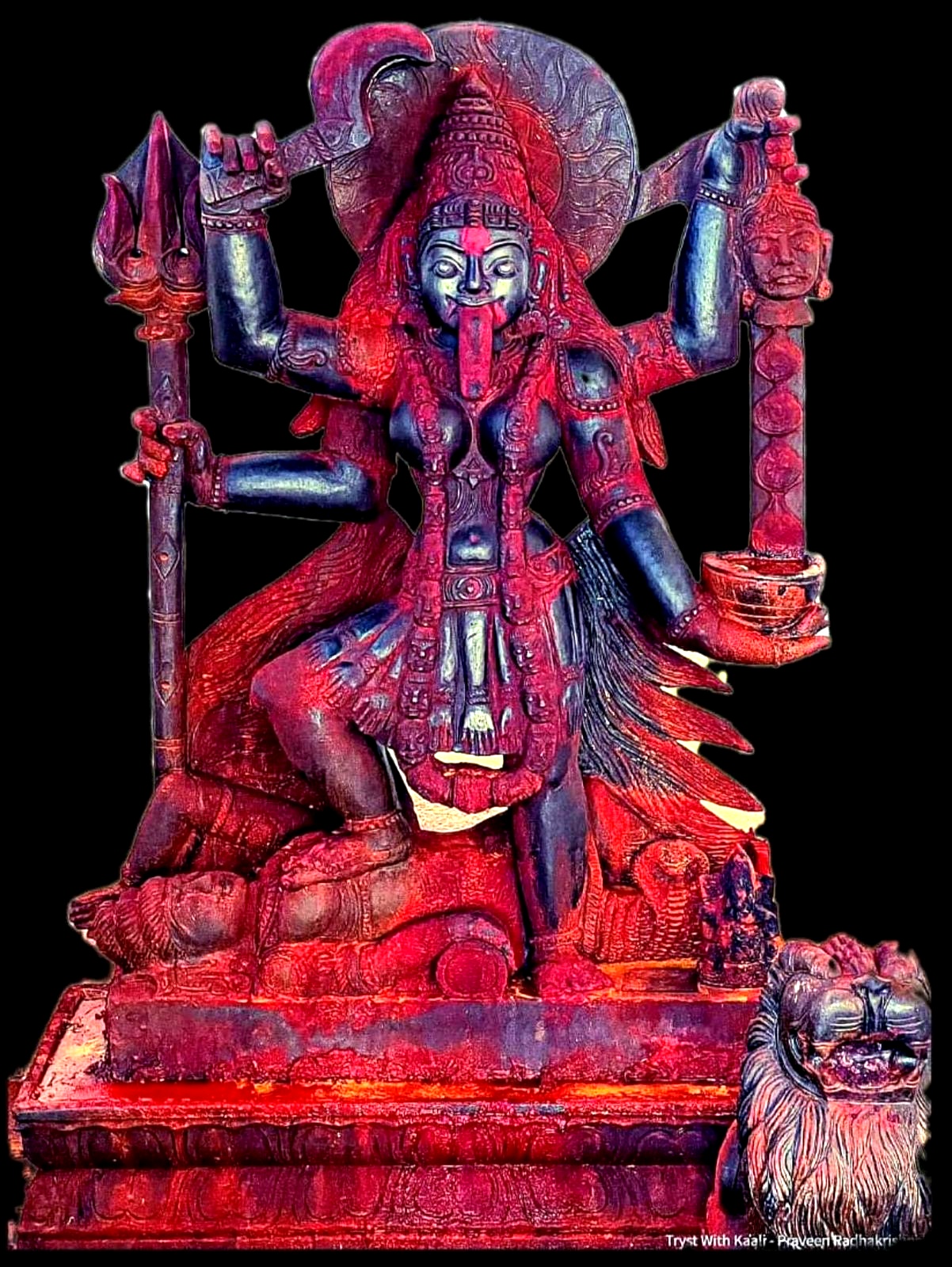
This page continues the Kakaradi Kali Sahasranama with names 334-444. Each name has a short devotional meaning in English, meant for prayer, japa preparation, and quiet study. This portion begins with the karma names, then moves through tortoise-like steadiness, compassion, firmness, sacred speech, the Kali age, the rosary in the hand, and finally the current of wisdom connected with the sage Kahola.
If you are reading the series in order, begin with Kakaradi Kali Sahasranama Names 1-111 with One-Line Meanings, continue through Names 112-222, and then read Names 223-333 before this section.
The Kakārādi Kali Sahasranama is a garland of Ma Kali's names in which the sound ka remains central. These names are not just titles. They give the devotee a way to remember Her through action, steadiness, fierce compassion, purity, sacred sound, and direct inward worship.
You can use these meanings for:
- daily prayer and slow devotional reading
- japa preparation before Kali sadhana
- study of Kali tattva through divine epithets
- contemplation of karma, steadiness, sacred speech, rosary practice, and the Kali age
These are devotional renderings, not a critical Sanskrit edition or word-for-word translation. The aim is simple: keep the meaning clear enough for prayer while preserving the bhava of the sahasranama.
Compiled by KaliPutra_Ashish
How To Read These Names
You do not have to finish all 111 names in one sitting. Read a smaller group slowly. If one name touches the heart, pause there. Let the sound and meaning settle into remembrance.
This section moves through several strong currents:
- karma and sacred action, shown through karmādhārā, karmakālī, karmadā, and related names
- steadiness and support, shown through the kamaṭhī and kamaṭhākṛtiḥ names
- fierce compassion and firmness, shown through karuṇākarakāntā, kaṭhorā, kaṭhinā, and kaṭhinadā
- sacred speech and creative order, shown through kalabhāṣāmayī, kalpā, kalpanā, kārikā, and kalageyā
- the Kali age, shown through kaliḥ, kalighnī, kalidūtī, kaligatiḥ, kalipūjyā, and kaliprasūḥ
- rosary and hand-offering, shown through the karamālā and kara names
- Kahola's wisdom-current, shown in the closing kahola names
Read slowly, and let action, sound, and devotion meet.
What Is Kakaradi Kali Sahasranama?
Sahasranama means a garland of one thousand names. The Kakaradi Kali Sahasranama is a thousand-name hymn of Ma Kali in which the sound-current of ka becomes central. Devotees use it for worship, japa, study, and contemplation.
Names 334-444 continue the karma current that closed the previous section. Here, action is not treated only as ordinary worldly motion. It becomes worship, purification, discipline, and grace. The Mother is remembered as the ground of action, the giver of action, the one who cuts karmic bondage, the one who sanctifies ritual, and the one who carries the devotee through the Kali age.
Kakaradi Kali Sahasranama Names 334-444 with One-Line Meanings
Names 334-351
- karmādhārā: She who is the foundation that supports all action and its results.
- karmabhūḥ: She who is the ground from which action and its results arise.
- karmakārī: She who performs, guides, and sanctifies every action.
- karmahārī: She who removes the binding burden of actions and their results.
- karmakautukasundarī: The beautiful Goddess who reveals the wondrous mystery of action.
- karmakālī: The Dark Goddess who works through action, time, and karmic transformation.
- karmatārā: The Savior Goddess who carries devotees across through the very field of action.
- karmacchinnā: She who cuts through the bonds woven by action and its results.
- karmadā: She who gives action, its fruit, and the power to act rightly.
- karmacāṇḍālinī: The fierce Goddess beyond convention who burns karmic bondage and breaks limiting ideas of purity.
- karmavedamātā: She who is the Mother of the sacred wisdom of action.
- karmabhūḥ: She who is the ground and source of all action and its results.
- karmakāṇḍaratānantā: She who delights endlessly in sacred rites and ritual action.
- karmakāṇḍānumānitā: She who is honored and understood through sacred ritual action.
- karmakāṇḍaparīṇāhā: She who brings ritual action to completion, fullness, and ripened fruit.
- kamaṭhī: The Tortoise-like One, steady, grounded, and enduring.
- kamaṭhākṛtiḥ: She whose form is the tortoise, the symbol of support, steadiness, and withdrawal within.
- kamaṭhārādhyahṛdayā: She whose heart is adored by those who practice tortoise-like steadiness and inward support.
Names 352-369
- kamaṭhākaṇṭhasundarī: The beautiful One whose strength is firm like the tortoise, steady in support and endurance.
- kamaṭhāsanasaṃsevyā: She who is served upon the tortoise-seat of stability and support.
- kamaṭhī: The Tortoise-like One who sustains the devotee with steady, grounded power.
- karmatatparā: She who is fully intent on sacred action and its results.
- karuṇākarakāntā: She who is beloved of the ocean of compassion, radiant with boundless mercy.
- karuṇākaravanditā: She who is saluted by the source of compassion itself.
- kaṭhorā: The hard, fierce, and unshakable One who gives inner strength.
- karamālā: She who is the garland of sacred actions, offerings, and devoted hands.
- kaṭhorakucadhāriṇī: She who bears firm breasts, fierce symbols of unshakable nourishment and power.
- kapardinī: She whose matted hair shines with the ascetic power of Shiva.
- kapaṭinī: She who veils Herself in mystery and reveals Herself through divine play.
- kaṭhinā: She who is firm, severe, and unshakable, giving the devotee inner strength.
- kaṅkabhūṣaṇā: She who is adorned with the kaṅka bird, wearing even fierce omens as cremation-ground power.
- karabhorūḥ: She whose thighs are graceful and strong like the trunk of a young elephant.
- kaṭhinadā: She who grants firmness, endurance, and the strength to withstand difficulty.
- karabhā: She who moves with young-elephant grace, strength, and noble beauty.
- karabhālayā: She who abides in elephant-like strength, making power and grace Her dwelling.
- kalabhāṣāmayī: She whose being is sacred speech, refined sound, artful expression, and divine communication.
Names 370-387
- kalpā: She who is sacred order, fulfillment, and the creative possibility behind all becoming.
- kalpanā: She who is divine imagination, conceiving worlds and paths of worship within Her mind.
- kalpadāyinī: She who grants worthy fulfillment through the wish-giving power of grace.
- kamalasthā: She who abides in the lotus, radiant with purity, beauty, and spiritual unfolding.
- kalāmālā: She who wears a garland of arts, rays, and subtle creative powers.
- kamalāsyā: She whose lotus-like face shines with beauty, compassion, and serene grace.
- kkaṇatprabhā: She whose radiance sparkles, rings, and resounds like living light.
- kakudminī: She who bears the noble crest, standing in exalted dignity and sovereign power.
- kaṣṭavatī: She who bears hardship and transforms suffering into strength and wisdom.
- karaṇīyakathārcitā: She who is worshipped through sacred teaching on what must be done.
- kacārcitā: She who is worshipped through the power of hair, the sign of wild ascetic freedom.
- kacatanuḥ: She whose form is clothed in flowing hair, radiant with untamed Goddess power.
- kacasundaradhāriṇī: She who bears beautiful hair, displaying the fierce loveliness of the free Goddess.
- kaṭhorakucasaṃlagnā: She who is joined with firm breasts, symbols of fierce nourishment and unshakable power.
- kaṭisūtravirājitā: She who shines adorned with the waist-thread, radiant in sacred discipline and beauty.
- karṇamakṣapriyā: She who delights in sacred hearing and subtle perception, receiving devotion through attentive awareness.
- kandā: She who is the root-source from which life, wisdom, and spiritual growth arise.
- kathākandagatiḥ: She who leads the devotee to the root of sacred story, where teaching returns to its source.
Names 388-405
- kaliḥ: She who is present even in the Kali age, turning darkness into a path of awakening.
- kalighnī: She who destroys the faults and darkness of the Kali age.
- kalidūtī: She who moves as the messenger-force of the Kali age, revealing truth amid decline and confusion.
- kavināyakapūjitā: She who is worshipped by the foremost poets, whose inspired words become offerings at Her feet.
- kaṇakakṣāniyantrī: She who guides the precious field of perception, turning vision and awareness toward divine truth.
- kaścitkavivarārcitā: She who is worshipped by rare and excellent poets, praised through inspired sacred speech.
- kartrī: She who is the doer and creatrix, the power behind every act and every becoming.
- kartṛkā: She who is the feminine force of action, shaping creation through Her own will.
- bhūṣākāriṇī: She who creates sacred adornment, making beauty itself an offering of worship.
- karṇaśatrupā: She who protects the ear from harmful words, guarding the devotee's inner hearing.
- karaṇeśī: She who is Mistress of the senses, instruments, and means through which action is done.
- karaṇapā: She who protects the senses and instruments of action, keeping them aligned with sacred purpose.
- kalavācā: She whose speech is artful and graceful, carrying wisdom through beauty and sound.
- kalānidhiḥ: She who is the treasure-house of arts, subtle powers, and creative rays.
- kalanā: She who measures, orders, and unfolds the subtle pattern of creation.
- kalanādhārā: She who is the foundation of sacred measure, rhythm, and cosmic order.
- kalanā: She who brings things into form through divine measuring, shaping, and creative intelligence.
- kārikā: She who teaches through sacred verses, concise wisdom, and illuminating formulas.
Names 406-423
- karā: She who acts, gives, protects, and blesses through Her divine hands.
- kalageyā: She who is sung in beautiful music, praised through artful devotional song.
- karkarāśiḥ: She who is the Cancer sign, the celestial field of protection, feeling, and sacred containment.
- karkarāśiprapūjitā: She who is worshipped through the Cancer sign, honored in the movements of the heavens.
- kanyārāśiḥ: She who is the Virgo sign, the celestial field of purity, discernment, and maiden power.
- kanyakā: She who is the young Maiden Goddess, pure, radiant, and worthy of reverent worship.
- kanyakāpriyabhāṣiṇī: She who speaks lovingly to maidens, blessing innocence, dignity, and youthful Goddess power.
- kanyakādānasantuṣṭā: She who is pleased when the maiden form of the Goddess is honored as sacred and worthy of care.
- kanyakādānatoṣiṇī: She who is satisfied by reverent offerings made to the maiden form of the Goddess.
- kanyādānakarānandā: She who delights in acts that honor, protect, and uphold the maiden's sanctity.
- kanyādānagraheṣṭadā: She who grants blessings when the maiden form of the Goddess is received with reverence and sacred responsibility.
- karṣaṇā: She who draws all beings toward Herself through the irresistible pull of divine grace.
- kakṣadahanā: She who burns hidden enclosures and secret impurities, clearing the inner space for freedom.
- kāmitā: She who is deeply desired as the highest Beloved and the supreme goal of longing.
- kamalāsanā: She who is seated upon the lotus, radiant with purity, beauty, and spiritual unfolding.
- karamālānandakartrī: She who creates the joy of mantra through the hand-held rosary.
- karamālāprapoṣitā: She who is nourished by devotion offered through the hand-held rosary.
- karamālāśayānandā: She who is the inner bliss resting in the hand-held rosary.
Names 424-444
- karamālāsamāgamā: She who joins the devotee to Herself through the hand-held rosary.
- karamālāsiddhidātrī: She who grants spiritual accomplishment through the hand-held rosary.
- karamālākarapriyā: She who loves the hand that moves the rosary in mantra practice.
- karapriyā: She who delights in hands devoted to worship, service, and sacred action.
- kararatā: She who rejoices in every hand made holy by worship and offering.
- karadānaparāyaṇā: She who is devoted to the giving hand, blessing all acts of sacred offering.
- kalānandā: She who delights in the bliss of divine art, subtle power, and sacred expression.
- kaligatiḥ: She who is the refuge, path, and final goal in the Kali age.
- kalipūjyā: She who is especially worshipped in the Kali age.
- kaliprasūḥ: She who gives birth to the hidden spiritual power of the Kali age.
- kalanādaninādasthā: She who abides in the echoing resonance of sacred art, rhythm, and sound.
- kalanādavarapradā: She who grants excellent boons through the sacred sound of art, rhythm, and music.
- kalanādasamājasthā: She who dwells in the holy gathering of sacred sound, art, and music.
- kaholā: She who shines through the wisdom-stream of the sage Kahola.
- kaholadā: She who grants the blessing and insight associated with the sage Kahola.
- kaholagehamadhyasthā: She who stands in the very center of the sage Kahola's sacred dwelling.
- kaholavaradāyinī: She who bestows boons upon the sage Kahola and through his lineage of wisdom.
- kaholakavitādhārā: She who is the flowing support of the sage Kahola's inspired poetry.
- kaholaṛṣimānitā: She who is honored by Kahola, the seer-sage.
- kaholamānasārādhyā: She who is worshipped in the contemplative mind of the sage Kahola.
- kaholavākyakāriṇī: She who acts through the inspired words of the sage Kahola.
A Simple Way To Contemplate These Names
Names 334-444 return again and again to action. Here, action is not only work, duty, or ritual. It belongs to the Mother's own field. She is the ground of karma, the remover of karmic burden, the one who ripens ritual, and the one who turns the hand, rosary, speech, and offering into worship.
For contemplation, you can read this section through six currents:
- Kali as Karma's Ground: the karma names show Her as the support, witness, giver, cutter, and purifier of action.
- Kali as Steadiness: the kamaṭhī names teach support, inward withdrawal, patience, and grounded practice.
- Kali as Firm Compassion: the karuṇā and kaṭhina names show a Mother who is merciful but not weak, fierce but not cruel.
- Kali as Sacred Speech: the kalabhāṣā, kavi, kārikā, and kalavācā names remember Her through poetry, teaching, music, and refined expression.
- Kali as Refuge in the Kali Age: the kali names show Her as destroyer of decline and as the path through difficult times.
- Kali as Rosary Practice: the karamālā names turn the hand-held mala into a bridge between devotee and Mother.
When read devotionally, this section teaches that Ma Kali is not absent from daily life. She is present in what is done, endured, spoken, offered, counted on the rosary, and changed through grace.
Why The Karma And Rosary Names Matter
The repeated karma names are useful for devotees who want spiritual practice to touch daily conduct. They remind the reader that action has consequence, and also that grace can cut, transform, and sanctify the marks left by action.
The karamālā names are especially practical. The rosary is held in the hand, bead by bead. These names show that japa is not only mental repetition. It is a meeting of hand, breath, sound, memory, and devotion.
Quick FAQ
What is the Kakaradi Kali Sahasranama?
It is a thousand-name hymn of Ma Kali where the sound-current of the letter ka is central. Devotees use it for worship, japa, study, and contemplative remembrance.
Are these all 1000 names of Kali?
No. This article covers names 334-444 only. It continues after names 1-111, 112-222, and 223-333.
Why do so many names here mention karma?
The karma names show Ma Kali as the foundation, giver, witness, cutter, and purifier of action. They help devotees remember that even action and consequence can become worship.
What do the karamālā names mean?
Karamālā can be read devotionally as the hand-held rosary. These names connect japa, the moving hand, mantra repetition, and the joy of remembrance.
Can I read these names in English for devotion?
Yes. English meanings can support devotional reading when the Sanskrit name remains visible and the meaning helps the mind stay connected to Ma Kali.
Is this a strict Sanskrit translation?
No. These are devotional one-line meanings meant for prayerful reading and contemplation, not a formal academic translation.
Related Reading
Continue the Kakaradi Kali Sahasranama study in order:
- Start here: Kakaradi Kali Sahasranama Names 1-111 with One-Line Meanings
- Earlier section: Kakaradi Kali Sahasranama Names 112-222 with One-Line Meanings
- Previous section: Kakaradi Kali Sahasranama Names 223-333 with One-Line Meanings
- This section: Names 334-444 with one-line devotional meanings
For related reflection on Ma Kali, mantra, and practice, you may also read:
- The Path of Japa: Achieving Spiritual Perfection Through Disciplined Chanting
- Why Kali Is Digambari: Ramprasad, Bama, Tara, and Shyama Khyapa
- The Terrifying Beauty of Mother Kali: Esoteric Insights
- Dasha Mahavidya: Maa Kali, the First Goddess of Tantra
Closing Reflection
Names 334-444 of the Kakaradi Kali Sahasranama remember Ma Kali as the foundation of karma, the steady tortoise-seat of practice, the fierce giver of strength, the Mother of sacred speech, the refuge of the Kali age, the joy inside the rosary, and the wisdom that speaks through Kahola.
This section reminds the devotee that the Mother is not only found in temple, mantra, or image. She is also present in action, discipline, endurance, speech, music, japa, and the quiet change that takes place in daily life.
Read slowly. Let one name stay with you. Let that name become remembrance.
Jai Ma Adya. Jai Kalabhairava. Jai Khyapa Parampara.