Om Shri Gurubhyo Namah, Jai Ma Adya, Jai Khyapa Parampara.
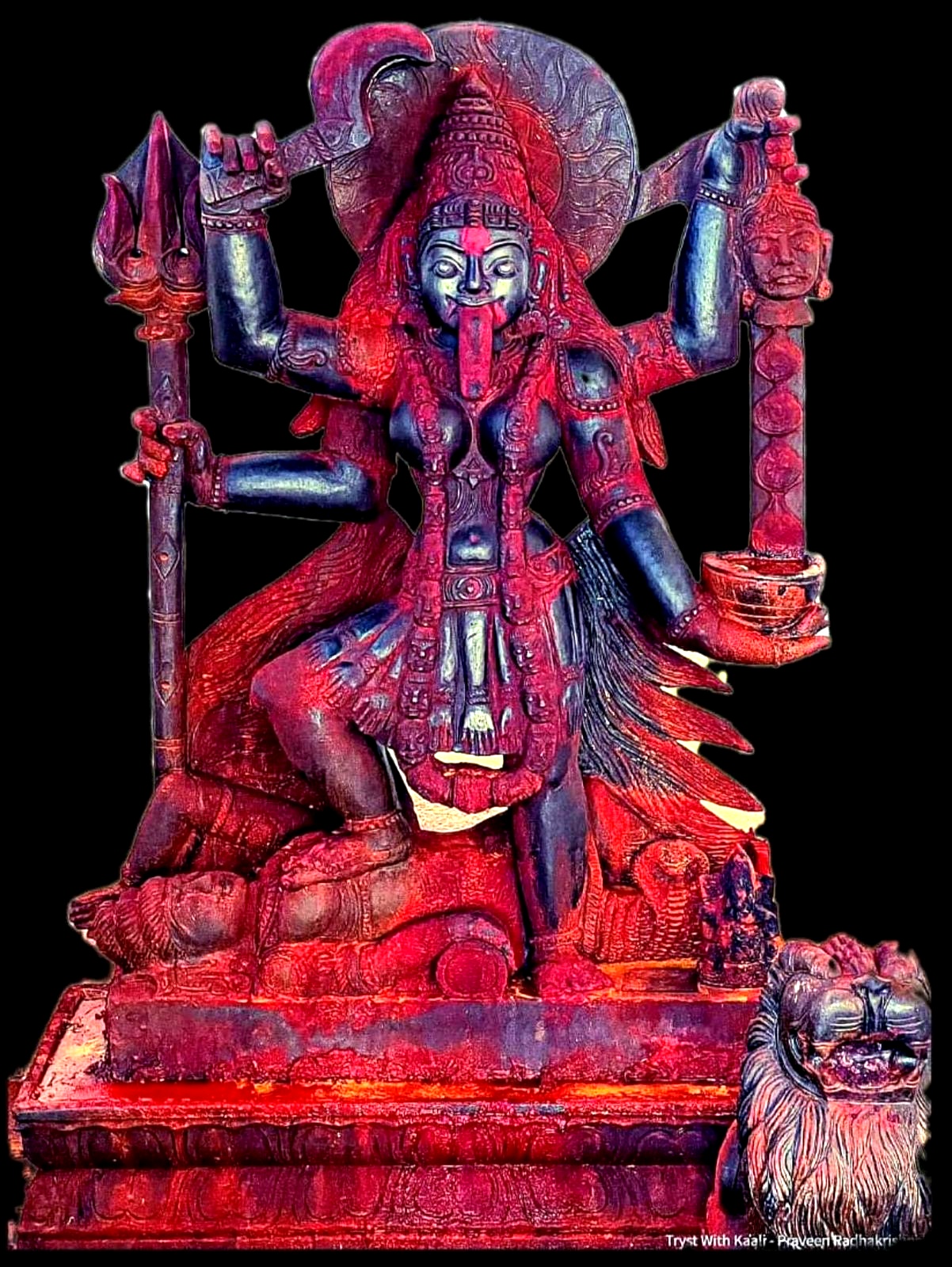
This page continues the Kakaradi Kali Sahasranama with names 667-777. The meanings are kept brief so they can be read during prayer, before japa, or in quiet study without breaking the flow of remembrance.
If you are reading the series in order, begin with Kakaradi Kali Sahasranama Names 1-111 with One-Line Meanings, then continue through Names 112-222, Names 223-333, Names 334-444, Names 445-555, and Names 556-666 before this section.
In names 667-777, the sahasranama moves through orchid-tree blossoms, bronze vessels and ritual sound, desire offered to the Mother, Kāśyapa's lineage, the Yamuna and Kaveri rivers, action and karma, Kākinī, poetry, Kāliṅga, black agarwood, the Wheel of Time, forest solitude, compassion, Kāmboja, golden mountain imagery, jasmine, Kuja, ritual grass, deep water-power, and the kula lineage.
You can use these meanings for:
- daily prayer and slow devotional reading
- japa preparation before Kali sadhana
- study of Kali tattva through divine epithets
- contemplation of desire, offering, karma, Time, forest worship, body-temple awareness, and kula lineage
These are devotional renderings, not a critical Sanskrit edition or word-for-word translation. The aim is simple: each line should be clear enough to pray with.
Compiled by KaliPutra_Ashish
How To Read These Names
You do not have to read all 111 names in one sitting. Take one group slowly. If a name opens devotion, stay with it before moving ahead.
Several currents run through this section:
- ritual offering and sound, shown through orchid-tree blossoms, bronze vessels, and bronze resonance
- desire purified into worship, shown through kāmasundarī, kāmapūjyā, kāmadā, kāmeśī, kāmarājaprapūjitā, and kāmabhedī
- river, forest, and place-power, shown through Kālindī, Kaveri, Kāmpilya, Kāmboja, and the kānana names
- karma, cause, and protection, shown through karmaṇā, kāraṇāhvayā, and kārmmaṇatroṭanakarī
- Time and inner fire, shown through kālacakra, kālagatiḥ, kālasundarī, and kālānalāśinī
- body, courage, and earth-power, shown through kāyasthā, kujā, kujamātā, kuṭhāravaradhāriṇī, and kuśa names
- kula lineage, shown through kulacūḍāmaṇiḥ, kulā, kulapūjyā, kulārādhyā, kulapūjāparāyaṇā, and kulabhūṣā
Read slowly. Let desire soften into prayer, action become offering, and lineage become remembrance.
What Is Kakaradi Kali Sahasranama?
Sahasranama means a garland of one thousand names. The Kakaradi Kali Sahasranama is a thousand-name hymn of Ma Kali in which the sound-current of ka remains central. Devotees read it for worship, japa, study, and remembrance.
Names 667-777 continue the current from the previous section. The earlier desire names now expand into ritual beauty, holy rivers, action, cause, poetry, fragrance, Time, forest solitude, body-presence, courage, ritual purity, deep primal forces, and the kula path of Shakti.
Kakaradi Kali Sahasranama Names 667-777 with One-Line Meanings
Names 667-684
- kāñcanāraprapūjitā: She who is worshipped with orchid-tree blossoms, accepting beauty when it is offered with love.
- kāñcarūpā: She whose form is clear and shining, like crystal touched by light.
- kāñcabhūmiḥ: She who is the radiant ground on which worship and realization stand.
- kāṃsyapātraprabhojinī: She who accepts offerings served in a bronze vessel.
- kāṃsyadhvanimayī: She who vibrates in the bronze sound of the ritual bell.
- kāmasundarī: She who is the Beautiful One of desire purified by worship.
- kāmacumbanā: She who blesses love and union through the power of awakened desire.
- kāśapuṣpapratīkāśā: She who shines like white reed-grass flowers, bright and gentle.
- kāmadrumasamāgamā: She who meets the wish-giving tree of desire and turns longing toward fulfillment.
- kāmapuṣpā: She who is the flower of desire, opening as beauty, love, and creative force.
- kāmabhūmiḥ: She who is the field where longing is planted, ripened, and made pure.
- kāmapūjyā: She who is worshipped through desire when desire becomes offering.
- kāmadā: She who grants worthy desires through Her compassionate power.
- kāmadehā: She whose body is desire itself, alive with love, beauty, and creation.
- kāmagehā: She whose dwelling is the place where longing becomes worship.
- kāmabījaparāyaṇā: She who abides in the seed-sound of desire, source of love and creation.
- kāmadhvajasamārūḍhā: She who is mounted on the banner of Kāma, raising desire as a victorious power.
- kāmadhvajasamāsthitā: She who stands firm on the banner of Kāma, steady in the force of longing.
Names 685-702
- kāśyapī: She who is connected with Kāśyapa, the ancient sage, and the wisdom of his lineage.
- kāśyapārādhyā: She who is worshipped by Kāśyapa, the ancient sage, as the supreme Goddess.
- kāśyapānandadāyinī: She who gives joy to Kāśyapa's lineage and blesses ancestral wisdom.
- kālindījalasaṅkāśā: She who resembles the Yamuna's waters: dark, flowing, and purifying.
- kālindījalapūjitā: She who is worshipped with the waters of the Yamuna.
- kādevapūjāniratā: She who delights in worship of the deity of the syllable "ka."
- kādevaparamārthadā: She who grants the highest truth of the deity of the syllable "ka."
- karmaṇā: She who is action itself, present in every deed and its fruit.
- karmaṇākārā: She who takes the form of action and result, shaping destiny through law.
- kāmakarmaṇakāriṇī: She who performs and transforms actions born of desire.
- kārmmaṇatroṭanakarī: She who breaks harmful occult actions and destructive karmic forces.
- kākinī: She who is Kākinī, a subtle feminine power of inner practice and awakened energy.
- kāraṇāhvayā: She who is called the Cause, the source from which all things arise.
- kāvyāmṛtā: She who is the nectar of poetry, making praise sweet and life-giving.
- kāliṅgā: She who is connected with Kāliṅga, the ancient region and its power.
- kāliṅgamardanodyatā: She who stands ready to subdue the power of Kāliṅga, overcoming pride and resistance.
- kālāgaruvibhūṣāḍhyā: She who is richly adorned with black agarwood and its dark fragrance.
- kālāgaruvibhūtidā: She who grants the power of black agarwood, blessing worship with scent and subtle force.
Names 703-720
- kālāgarusugandhā: She who is fragrant with black agarwood, drawing the heart through scent.
- kālāgarupratarpaṇā: She who is refreshed and pleased by offerings of black agarwood.
- kāverīnīrasamprītā: She who is delighted by the waters of the Kaveri River.
- kāverītīravāsinī: She who dwells on the bank of the Kaveri, blessing its waters and shores.
- kālacakrabhramākārā: She whose form is the turning Wheel of Time, moving worlds through change and return.
- kālacakranivāsinī: She who dwells within the Wheel of Time, present in every cycle of birth, death, and renewal.
- kānanā: She who is the forest itself, the wild grove where Her presence is hidden and alive.
- kānanādhārā: She who is the foundation of the forest, supporting the wild places of solitude and worship.
- kāruḥ: She who is the maker and artisan, shaping the universe with skill, care, and intention.
- kāruṇikāmayī: She who is filled with compassion, overflowing with mercy toward all beings.
- kāmpilyavāsinī: She who dwells in Kāmpilya, the ancient holy city, and makes it Her own.
- kāṣṭhā: She who is limit, measure, and firmness, marking boundary and rhythm.
- kāmapatnī: She who is the consort of desire, joined with love as creative power.
- kāmabhūḥ: She who is the ground and birthplace of desire, from whom longing and creation arise.
- kādambarīpānaratā: She who delights in honey-wine or nectar, tasting the sweetness of bliss.
- kādambarīkalā: She who is the subtle art of honey-wine or nectar, the refined essence of delight.
- kāmavandyā: She who is adored by desire itself and by those who seek Her through love.
- kāmeśī: She who is Kāmeśī, the Sovereign Lady of desire, love, and longing.
Names 721-738
- kāmarājaprapūjitā: She who is deeply worshipped by Kāmarāja, the King of Love.
- kāmarājeśvarīvidyā: She who is the wisdom of Kāmarājeśvarī, Queen of the Lord of Love.
- kāmakautukasundarī: She who is beautiful in the wonder and play of desire.
- kāmbojajā: She who is born in or connected with Kāmboja, the ancient region and its power.
- kāñchinadā: She who grants golden blessing, beauty, prosperity, and adornment.
- kāṃsyakāñcanakāriṇī: She who works through bronze and gold, sanctifying offering, beauty, and prosperity.
- kāñcanādrisamākārā: She whose appearance is like the golden mountain, vast, radiant, and unshakable.
- kāñcanādripradānadā: She who gives the gift of the golden mountain, bestowing vast abundance.
- kāmakīrtiḥ: She who is the glory of desire when longing becomes devotion.
- kāmakeśī: She whose beauty, even to Her flowing hair, carries desire and creative power.
- kārikā: She who teaches through verses and formulas, turning speech into wisdom.
- kāntarāśrayā: She who takes refuge in the wild forest, revealing Herself in solitude, danger, and hidden places.
- kāmabhedī: She who pierces desire, cutting through craving so that longing becomes devotion.
- kāmārtināśinī: She who destroys the torment of desire, freeing the heart from restless hunger.
- kāmabhūmikā: She who is the ground of desire, the field from which love, longing, and creation arise.
- kālānalāśinī: She who consumes the fire of Time, absorbing even death and change into Her own dark power.
- kāvyavanitā: She who is the graceful Lady of poetry, making praise beautiful and alive.
- kāmarūpiṇī: She who assumes the form of desire, appearing in whatever form draws the soul toward Her.
Names 739-756
- kāyasthā: She who abides within the body, making the living form a temple of Her presence.
- kāmasandīptiḥ: She who kindles desire into spiritual fire.
- kāvyadā: She who grants poetry, inspired speech, and the power to praise beautifully.
- kālasundarī: She who is the Beauty of Time, radiant within birth, change, death, and liberation.
- kāmeśī: She who is the Sovereign Lady of desire, love, and longing.
- kāraṇavarā: She who is the supreme Cause behind all causes and the giver of excellent boons.
- kāmeśīpūjanodyatā: She who inspires and receives worship as Kāmeśī, revealing desire as a path.
- kāñcīnūpurabhūṣāḍhyākuṅkumābharaṇānvitā: She who is richly adorned with girdle, anklets, and red vermilion ornaments.
- kālacakrā: She who is the Wheel of Time, turning all worlds through creation, dissolution, and return.
- kālagatiḥ: She who is the movement and destiny of Time, guiding all beings through change.
- kālacakrāmanobhavā: She who arises in the mind as the Wheel of Time, opening insight into life's cycles.
- kundamadhyā: She who abides among jasmine blossoms, radiant with purity and fragrance.
- kundapuṣpā: She who is the jasmine flower, white, fragrant, and fit for sacred offering.
- kundapuṣpapriyā: She who loves jasmine flowers and receives their purity as a tender offering.
- kujā: She who is earth-born and fiery, manifesting strength, courage, and embodied power.
- kujamātā: She who is the Mother of Kuja, the earth-born planetary power of courage and force.
- kujārādhyā: She who is worshipped by Kuja, the fiery planet Mars, and by powers of courage.
- kuṭhāravaradhāriṇī: She who bears the excellent axe, cutting through bondage, pride, and obstruction.
Names 757-774
- kuñcarasthā: She who stands upon the elephant, ruling strength, majesty, and steady power.
- kuśaratā: She who delights in ritual grass, purity, and disciplined offerings.
- kuśeśayavilocanā: She whose lotus-like eyes open with beauty, compassion, and grace.
- kumaṭhī: She who is tortoise-like in steadiness, withdrawing and supporting the worlds with patient strength.
- kurarī: She who is like the sharp-crying bird of the wild, fierce, watchful, and free.
- kudrā: She who is present even in rough, obscure, and difficult forms, leaving no place outside Her power.
- kuraṅgī: She who is deer-like in grace, alertness, and swift, gentle movement.
- kuṭajāśrayā: She who takes refuge in the kuṭaja tree, blessing healing plants and forest worship.
- kumbhīnasavibhūṣā: She who is adorned with the power of the crocodile-like deep-water force, mastering hidden danger and primal fear.
- kumbhīnasavadhodyatā: She who is ready to slay the crocodile-like deep-water force, overcoming hidden threats and primal fear.
- kumbhakarṇamanollāsā: She who gladdens even the mind of Kumbhakarṇa, the mighty sleeping giant, awakening joy in heavy darkness.
- kulacūḍāmaṇiḥ: She who is the crest-jewel of the lineage, its highest beauty and secret treasure.
- kulā: She who is the lineage itself, the living family of Shakti and spiritual transmission.
- kulālagṛhakanyā: She who is the maiden of the potter's house, present in humble labor and ordinary homes.
- kulacūḍāmaṇipriyā: She who loves the crest-jewel of the lineage and delights in its highest realization.
- kulapūjyā: She who is worshipped within the lineage as its honored and living Goddess.
- kulārādhyā: She who is adored through the lineage, receiving worship through its rites and wisdom.
- kulapūjāparāyaṇā: She who is wholly devoted to lineage worship, revealing holiness through practice.
Names 775-777
- kulabhūṣā: She who is the ornament of the lineage, making its path beautiful and powerful.
- kukṣiḥ: She who is the womb and belly of creation, holding all beings within Her vast interior.
- kurarīgaṇasevitā: She who is served by flocks of sharp-crying wild birds, honored in fierce and solitary places.
Devotional Meaning Of This Section
Names 667-777 show Ma Kali receiving many forms of offering: flowers, bronze vessels, ritual sound, river water, scent, poetry, gold, jasmine, kuśa grass, courage, and lineage worship. Nothing is too simple when it is brought with devotion.
The desire names continue strongly, but their mood is not ordinary craving. Desire appears as flower, field, seed, banner, beauty, and worship. Ma Kali is also praised as the one who pierces desire and destroys its torment, so longing can become devotion instead of restlessness.
The Time and forest names deepen the mood. The Wheel of Time turns, the forest becomes a hidden shrine, and the body itself becomes a temple. The reader is asked to see the Mother not only in formal ritual, but also in solitude, change, embodied life, and the rough places of existence.
Why The Kula Names Matter Here
The closing names of this section move into kula, the lineage or spiritual family of Shakti. In devotional reading, these names remember Ma Kali as the jewel, body, worship, beauty, and living presence of the lineage.
This matters because the sahasranama is not only a list of private meanings. It belongs to a current of practice, memory, worship, and transmission. The kula names remind the reader that devotion is carried through teachers, families of practice, ritual inheritance, and the Mother's hidden grace.
Quick FAQ
What is the Kakaradi Kali Sahasranama?
It is a thousand-name hymn of Ma Kali in which the sound-current of the letter ka is central. Devotees use it for worship, japa, study, and remembrance.
Are these all 1000 names of Kali?
No. This article covers names 667-777 only. It continues after names 1-111, 112-222, 223-333, 334-444, 445-555, and 556-666.
Why do so many names mention desire?
This section treats desire as a force that can be offered, purified, fulfilled, pierced, and transformed. In devotional reading, longing becomes a path toward Ma Kali rather than a distraction from Her.
What does Kālacakra mean in these names?
Kālacakra means the Wheel of Time. Here, Ma Kali is remembered as the one who turns, enters, and transcends the cycles of birth, death, change, and return.
What does kula mean here?
In this devotional context, kula points to lineage, spiritual family, and the living current of Shakti practice. The kula names remember Ma Kali as the jewel and honored Goddess of that lineage.
Can I read these English meanings during Kali practice?
Yes. English meanings can help the mind remain steady when the Sanskrit name is unfamiliar. Keep the Sanskrit name visible, read the meaning slowly, and let it become remembrance.
Is this a strict Sanskrit translation?
No. These are devotional one-line meanings meant for prayerful reading and contemplation, not a formal academic translation.
Related Reading
Continue the Kakaradi Kali Sahasranama study in order:
- Start here: Kakaradi Kali Sahasranama Names 1-111 with One-Line Meanings
- Earlier section: Kakaradi Kali Sahasranama Names 112-222 with One-Line Meanings
- Earlier section: Kakaradi Kali Sahasranama Names 223-333 with One-Line Meanings
- Earlier section: Kakaradi Kali Sahasranama Names 334-444 with One-Line Meanings
- Earlier section: Kakaradi Kali Sahasranama Names 445-555 with One-Line Meanings
- Previous section: Kakaradi Kali Sahasranama Names 556-666 with One-Line Meanings
- This section: Names 667-777 with one-line devotional meanings
For related reflection on Ma Kali, mantra, desire, and practice, you may also read:
- Shri Kali Tandava Stotram: Lyrics, Meaning, and Commentary
- The Terrifying Beauty of Mother Kali: Esoteric Insights
- Dasha Mahavidya: Maa Kali, the First Goddess of Tantra
- Kali Tantra Puja at Home: A Warning from Shyama Khyapa
- The Path of Japa: Achieving Spiritual Perfection Through Disciplined Chanting
- Why Kali Is Digambari: Ramprasad, Bama, Tara, and Shyama Khyapa
Closing Reflection
Names 667-777 of the Kakaradi Kali Sahasranama remember Ma Kali as the receiver of flower, sound, scent, water, desire, action, poetry, gold, jasmine, courage, ritual grass, forest power, body-presence, and lineage worship.
This section teaches that devotion can pass through many doors. Desire can become offering. Time can become wisdom. The body can become a temple. The forest can become a shrine. Lineage can become the Mother's living ornament.
Read slowly. Let one name stay with you. Let that name become remembrance.
Jai Ma Adya. Jai Kalabhairava. Jai Khyapa Parampara.