Om Shri Gurubhyo Namah, Jai Ma Adya, Jai Khyapa Parampara.
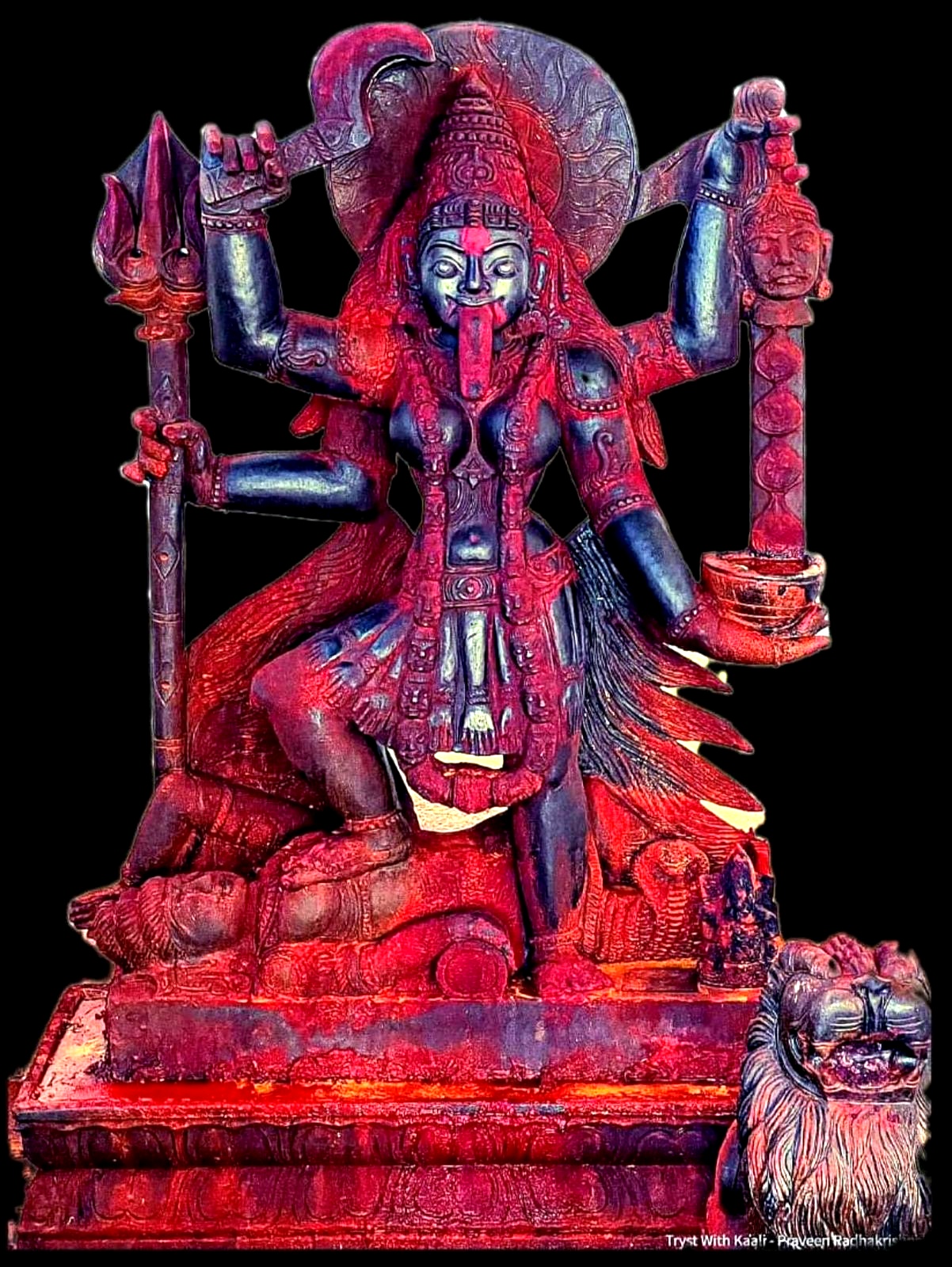
This page continues the Kakaradi Kali Sahasranama with names 556-666. The meanings are kept short so they can be read before japa, used in daily prayer, or taken one name at a time. This portion begins with the flower of longing, then turns toward desire offered to the Mother, Time, Kāśī, Kāñcī, seed-mantras, Kāmākhyā, Kāmarūpa, Kālabhairava, Kātyāyanī, Kashmir, Kārttika, and sacred blossoms.
If you are reading the series in order, begin with Kakaradi Kali Sahasranama Names 1-111 with One-Line Meanings, then continue through Names 112-222, Names 223-333, Names 334-444, and Names 445-555 before this section.
The Kakārādi Kali Sahasranama is a garland of Ma Kali's names in which the sound ka remains central. For devotees, each name becomes a small doorway into sound, meaning, place, offering, inner change, and the Mother's grace.
You can use these meanings for:
- daily prayer and slow devotional reading
- japa preparation before Kali sadhana
- study of Kali tattva through divine epithets
- contemplation of sacred desire, Time, seed-mantra, Kālabhairava, Kāmākhyā, Kāmarūpa, Kātyāyanī, Kashmir, and Kārttika
These are devotional renderings, not a critical Sanskrit edition or word-for-word translation. The aim is simple: keep the meaning clear enough for prayer while preserving the bhava of the sahasranama.
Compiled by KaliPutra_Ashish
How To Read These Names
You do not have to finish all 111 names at once. Read a smaller group slowly. If one name catches the heart, stay there for a while. Let the name become remembrance before moving ahead.
This section carries several strong currents:
- sacred longing and flower-offering, shown through the kāminīpuṣpa names
- desire purified into worship, shown through kāmā, kāmadevī, kāmeśī, kāmabhāvā, kāmaratā, and kāmakalā
- Time and dissolution, shown through kālakālikā, kālānalasamaprabhā, kalpāntadahanā, kālamātā, kālasiddhā, and kāladā
- holy places and mantra-lineage, shown through Kāśī, Kāñcī, kādividyā, kādimātā, krāṃbījā, and krīṃbījā
- Kāmākhyā and Kāmarūpa, where sacred desire becomes a land, form, practice, and inner power
- Kālabhairava and warrior power, shown through kālabhairavabhāryā, kālabhairavakāminī, Kārttikeya, and Kārttika names
- radiance, cause, and sacred blossoms, shown through kāntidā, kāntimayī, kāraṇadā, kātyāyanī, kāñcanāraprasūnabhūḥ, and kāñcanāraprasūnābhā
Read slowly. Let the desire names be read as prayer, not as ordinary craving.
What Is Kakaradi Kali Sahasranama?
Sahasranama means a garland of one thousand names. The Kakaradi Kali Sahasranama is a thousand-name hymn of Ma Kali where the sound-current of ka becomes central. Devotees read and recite it for worship, japa, study, and remembrance.
Names 556-666 continue the current of desire that appeared at the end of the previous section. Here, Ma Kali is praised as the flower of longing, the Goddess of love, the fire of Time, the Mother of Time, the power of Kāśī and Kāñcī, the seed-sounds krāṃ and krīṃ, Kāmākhyā, Kāmarūpa, the beloved of Kālabhairava, the giver of beauty, the accomplisher of sacred work, Kātyāyanī, the wisdom of Kashmir, and the radiance of sacred blossoms.
Kakaradi Kali Sahasranama Names 556-666 with One-Line Meanings
Names 556-573
- kāminīpuṣpadhāriṇī: She who bears the flowers of sacred longing, adorning Herself with love offered in purity.
- kāminīpuṣpanilayā: She who dwells in the flowers of sacred desire, making love itself a shrine.
- kāminīpuṣpapūrṇimā: She who is the full moon among the flowers of sacred desire, filling longing with luminous grace.
- kāminīpuṣpapūjārhā: She who is worthy of worship with the flowers of sacred love and refined devotion.
- kāminīpuṣpabhūṣaṇā: She who is adorned with the flowers of sacred desire, beauty, and devotional love.
- kāminīpuṣpatilakā: She who wears the flower of sacred longing as Her auspicious mark of divine beauty.
- kāminīkuṇḍacumbanā: She who blesses the hidden vessel of sacred desire, sanctifying the creative source with divine love.
- kāminīyogasantuṣṭā: She who is pleased by the yoga of sacred union, where longing becomes worship.
- kāminīyogabhogadā: She who grants the bliss of sacred union, transforming desire into divine enjoyment.
- kāminīkuṇḍasammagnā: She who is deeply immersed in the hidden vessel of sacred desire, dwelling in the mystery of creative power.
- kāminīkuṇḍamadhyagā: She who abides at the center of the hidden vessel of sacred power, the innermost seat of divine creativity.
- kāminīmānasārādhyā: She who is worshipped in the beloved mind, where sacred desire becomes inward devotion.
- kāminīmānatoṣitā: She who is pleased by reverent honor offered through sacred love and refined devotion.
- kāminīmānasañcārā: She who moves through the mind of the beloved, turning desire toward divine remembrance.
- kālikā: She who is the tender and terrible Dark Goddess, ruling time, transformation, and liberating grace.
- kālakālikā: She who is the Dark Goddess within Time itself, the hidden power behind death, change, and liberation.
- kāmā: She who is sacred desire, love, and the creative force that moves the universe.
- kāmadevī: She who is the Goddess of desire, turning attraction and longing toward divine union.
Names 574-591
- kāmeśī: She who is the Sovereign Lady of desire, ruling love as a path to the Divine.
- kāmasambhavā: She who arises from sacred desire and awakens holy longing in the heart.
- kāmabhāvā: She whose very nature is the feeling of sacred desire, love, and creative power.
- kāmaratā: She who delights in sacred love, revealing desire as an offering when purified by devotion.
- kāmārtā: She who is intensely moved by the fire of love, drawing the soul toward union.
- kāmamañjarī: She who is the tender flowering cluster of sacred desire, blossoming as beauty and devotion.
- kāmamañjīraraṇitā: She whose anklets ring with the music of sacred desire, calling the devotee into divine love.
- kāmadevapriyāntarā: She who is inwardly beloved of Kāma, the God of Love, and is the secret heart of sacred attraction.
- kāmakālī: She who is the Dark Goddess as sacred desire transformed into liberating power.
- kāmakalā: She who is the subtle creative art of desire, the hidden power by which love becomes manifestation.
- kālikā: She who is the tender and terrible Dark Goddess, ruling time, transformation, and liberating grace.
- kamalārcitā: She who is worshipped with lotuses, receiving pure offerings of beauty and spiritual unfolding.
- kādikā: She who belongs to the sacred mantra tradition beginning with the syllable "ka," revealing wisdom through sound.
- kamalā: She who is the Lotus Goddess, radiant with purity, beauty, abundance, and spiritual unfolding.
- kālī: She who is the Dark Goddess, beyond time, death, and limitation, granting transformation and liberation.
- kālānalasamaprabhā: She whose radiance is like the fire of Time, burning away worlds, karma, and ignorance.
- kalpāntadahanā: She who burns the universe at the end of an age, dissolving all forms back into Herself.
- kāntā: She who is the beloved and beautiful One, drawing the heart into devotion.
Names 592-609
- kāntārapriyavāsinī: She who loves to dwell in the wilderness, revealing Herself in solitude, danger, and freedom.
- kālapūjyā: She who is worshipped by Time and through Time, receiving every moment as an offering.
- kālaratā: She who delights in Time and its mysteries, playing through birth, change, death, and renewal.
- kālamātā: She who is the Mother of Time, giving birth to all moments and gathering them back into Herself.
- kālinī: She who is the feminine power of Time, moving all beings through transformation.
- kālavīrā: She who is the heroic power of Time, fearlessly carrying all things toward truth.
- kālaghorā: She who is the terrifying power of Time, fierce enough to destroy illusion and ego.
- kālasiddhā: She who has mastered Time, granting realization beyond birth, decay, and death.
- kāladā: She who grants time, destiny, and the wisdom to transcend death through Her grace.
- kālañjanasamākārā: She whose form is like black collyrium, dark, protective, and beautiful with the mystery of the Dark Goddess.
- kālañjaranivāsinī: She who dwells on sacred Mount Kalanjara, abiding in hidden places of power and austerity.
- kālaṛddhiḥ: She who is the prosperity of Time, making every moment ripen into wisdom and fulfillment.
- kālavṛddhiḥ: She who expands Time itself, bringing all beings through growth, change, maturity, and release.
- kārāgṛhavimocinī: She who frees beings from prison, bondage, limitation, and every chain that confines the soul.
- kādividyā: She who is the sacred knowledge of the Goddess mantra tradition beginning with the syllable "ka."
- kādimātā: She who is the Mother of the mantra lineage beginning with "ka," giving birth to wisdom through sacred sound.
- kādisthā: She who abides in the mantra beginning with "ka," present in its sound, meaning, and living power.
- kādisundarī: She who is the Beautiful One of the "ka" mantra tradition, radiant through sacred sound and subtle wisdom.
Names 610-627
- kāśī: She who is Kāśī, Varanasi, the city of light where Her grace turns death into liberation.
- kāñcī: She who is Kāñcī, the sacred girdle and holy city, binding the devotee to purity, power, and protection.
- kāñcīśā: She who is Mistress of Kāñcī, ruling the sacred girdle, the holy city, and the gathered power of the Goddess.
- kāśīśavaradāyinī: She who grants the blessings of the Lord of Kāśī, bestowing boons of light, worship, and liberation.
- krāṃbījā: She who is the seed-sound krāṃ, a concentrated sound-form of fierce divine power.
- krīṃbījā: She who is the seed-sound krīṃ, the compact mantra-heart of the Dark Goddess.
- kāmyā: She who is worthy of sacred longing, drawing every desire toward divine love and fulfillment.
- kāmyagatiḥ: She who is the path of worthy desire, guiding longing toward its highest and holiest goal.
- kāmyasiddhidātrī: She who grants the accomplishment of cherished aims when desire is offered into Her power.
- kāmabhūḥ: She who is the ground and birthplace of desire, from whom love, beauty, and creation arise.
- kāmākhyā: She who is Kāmākhyā, the famed Goddess of desire-power worshipped at the great sacred seat in Assam.
- kāmarūpā: She whose form is sacred desire, and who shines through Kāmarūpa, the holy land of Desire-Form.
- kāmacāpavimocinī: She who releases the bow of the God of Love, setting sacred desire in motion as divine power.
- kāmadevakalārāmā: She who delights in the arts and subtle powers of Kāma, the God of Love.
- kāmadevakalālayā: She who is the abode of the arts and powers of Kāma, holding love as a sacred creative force.
- kāmarātriḥ: She who is the sacred night of desire, where longing becomes mystery, union, and inner worship.
- kāmadātrī: She who grants worthy desire, fulfilling the heart through love, devotion, and divine grace.
- kāntārācalavāsinī: She who dwells upon the mountain in the wilderness, revealing Herself in solitude, danger, and freedom.
Names 628-645
- kāmarūpā: She whose form is sacred desire, manifesting as the divine power that shapes longing into realization.
- kālagatiḥ: She who is the movement and destiny of Time, carrying all beings toward transformation and truth.
- kāmayogaparāyaṇā: She who is devoted to the yoga of sacred desire, joining longing, love, and liberation in Herself.
- kāmasammardanaratā: She who delights in subduing restless desire, transforming craving into liberating power.
- kāmagehavikāsinī: She who blossoms in the house of desire, making love and longing unfold as sacred worship.
- kālabhairavabhāryā: She who is the consort of Kālabhairava, the fierce Lord of Time, sharing His power of deathless transformation.
- kālabhairavakāminī: She who is beloved of Kālabhairava, the fierce Lord of Time, united with Him in sacred desire and power.
- kālabhairavayogasthā: She who abides in yogic union with Kālabhairava, the fierce Lord of Time and transformation.
- kālabhairavabhogadā: She who grants the sacred enjoyment of union with Kālabhairava, turning fierce power into divine bliss.
- kāmadhenuḥ: She who is the wish-fulfilling cow of abundance, nourishing devotees with blessings and fulfillment.
- kāmadogdhrī: She who milks forth the fulfillment of desire, giving what nourishes the heart and supports the path.
- kāmamātā: She who is the Mother of desire, giving birth to love, beauty, longing, and creative power.
- kāntidā: She who grants beauty, radiance, charm, and the shining grace of divine presence.
- kāmukā: She who is filled with sacred passion, revealing desire as a force of love, devotion, and creation.
- kāmukārādhyā: She who is worshipped by passionate devotees, receiving longing when it is offered as devotion.
- kāmukānandavarddhinī: She who increases the bliss of passionate devotees, deepening sacred love into spiritual joy.
- kārttavīryyā: She who is connected with Kartavirya's heroic power, transforming royal strength into divine courage.
- kārttikeyā: She who is connected with Kārttikeya, the divine warrior Skanda, and shines with victorious spiritual power.
Names 646-666
- kārttikeyaprapūjitā: She who is deeply worshipped by Kārttikeya, the divine warrior Skanda.
- kāryyā: She who is the sacred work to be done, the holy task through which devotion becomes action.
- kāraṇadā: She who gives the cause, revealing the hidden reason and divine purpose behind all things.
- kāryyakāriṇī: She who accomplishes every sacred task, bringing divine intention into completed action.
- kāraṇāntarā: She who is the inner cause beyond all causes, hidden behind every movement of the universe.
- kāntigamyā: She who is reached through beauty and radiance, drawing the heart toward Her shining presence.
- kāntimayī: She who is made of beauty and radiance, filling all forms with luminous grace.
- kātyā: She who is the sacred feminine power of sage Kātya's lineage, honored through ancestral wisdom.
- kātyāyanī: She who is Kātyāyanī, the fierce and auspicious Goddess of sage Kātyāyana's line.
- kā: She who is the sacred syllable "ka," the subtle sound-seed of Goddess power.
- kāmasārā: She who is the essence of desire, the pure longing from which love, worship, and creation arise.
- kāśmīrā: She who is linked with Kāśmīra, the sacred Kashmir region and its subtle wisdom tradition.
- kāśmīrācāratatparā: She who is devoted to the sacred practices of the Kashmir tradition.
- kāmarūpācāraratā: She who delights in the sacred practices of Kāmarūpa, the holy land of Desire-Form.
- kāmarūpapriyaṃvadā: She who speaks sweetly of Kāmarūpa, praising the sacred land of Desire-Form with love.
- kāmarūpācārasiddhiḥ: She who is the perfection of the sacred practices of Kāmarūpa, the holy land of Desire-Form.
- kāmarūpamanomayī: She whose mind is formed of Kāmarūpa's sacred desire-power, shaping longing into realization.
- kārttikī: She who is connected with the sacred month of Kārttika and the victorious power of the divine warrior.
- kārttikārādhyā: She who is worshipped in the sacred month of Kārttika and adored by the divine warrior Skanda.
- kāñcanāraprasūnabhūḥ: She who is the source of orchid-tree blossoms, unfolding beauty as an offering to the Divine.
- kāñcanāraprasūnābhā: She who shines like orchid-tree blossoms, radiant with delicate beauty and sacred color.
Devotional Meaning Of This Section
Names 556-666 carry desire into worship. The sahasranama does not push longing outside spiritual life; it brings longing before Ma Kali and asks that it be purified, steadied, deepened, and turned toward the Divine.
The Time names add a fierce current. Kali appears here as the Mother of Time, the fire of Time, the terrible and heroic power of Time, and the grace that carries the devotee beyond fear of change and death.
The holy place names give this section much of its weight. Kāśī, Kāñcī, Kāmākhyā, Kāmarūpa, Kashmir, and Kārttika are more than geography or calendar markers here. They become inner pilgrimage points where mantra, body, desire, wisdom, radiance, and practice meet.
Why Kāmākhyā, Kāmarūpa, And Kālabhairava Matter Here
The Kāmākhyā and Kāmarūpa names show desire as a power of the Goddess. In devotional reading, these names do not point to ordinary craving. They point to longing offered into Ma Kali and to the hidden creative force that can become worship.
The Kālabhairava names deepen the fierce current. Ma Kali is remembered as the consort and beloved of Kālabhairava, the Lord of Time. In these names, desire, death, transformation, yoga, and bliss are held in one field of worship.
The Kātyāyanī, Kārttikeya, and Kārttika names bring in warrior strength and auspicious feminine power. They remind the devotee that longing also has to become courage, discipline, and sacred action.
Quick FAQ
What is the Kakaradi Kali Sahasranama?
It is a thousand-name hymn of Ma Kali in which the sound-current of the letter ka is central. Devotees use it for worship, japa, study, and remembrance.
Are these all 1000 names of Kali?
No. This article covers names 556-666 only. It continues after names 1-111, 112-222, 223-333, 334-444, and 445-555.
Why do so many names in this section mention desire?
This portion treats desire as something that can be offered and purified. The names remember Ma Kali as the one who gives worthy desire, subdues restless craving, and turns love toward divine realization.
What do krāṃ and krīṃ mean here?
In this devotional rendering, krāṃ and krīṃ are treated as seed-sounds of fierce Goddess power. They point to Ma Kali's compact mantra-presence rather than to a long philosophical explanation.
Why are Kāśī, Kāñcī, Kāmākhyā, Kāmarūpa, and Kashmir mentioned?
These names connect Ma Kali with sacred places, lineages, and practice traditions. In devotional reading, they also become inner places of pilgrimage where the devotee meets Her through mantra, longing, wisdom, and worship.
Can I read these English meanings during Kali practice?
Yes. English meanings can help the mind stay focused when the Sanskrit name is unfamiliar. Keep the Sanskrit name visible, read the meaning slowly, and let the name become remembrance.
Is this a strict Sanskrit translation?
No. These are devotional one-line meanings meant for prayerful reading and contemplation, not a formal academic translation.
Related Reading
Continue the Kakaradi Kali Sahasranama study in order:
- Start here: Kakaradi Kali Sahasranama Names 1-111 with One-Line Meanings
- Earlier section: Kakaradi Kali Sahasranama Names 112-222 with One-Line Meanings
- Earlier section: Kakaradi Kali Sahasranama Names 223-333 with One-Line Meanings
- Earlier section: Kakaradi Kali Sahasranama Names 334-444 with One-Line Meanings
- Previous section: Kakaradi Kali Sahasranama Names 445-555 with One-Line Meanings
- This section: Names 556-666 with one-line devotional meanings
For related reflection on Ma Kali, mantra, sacred desire, and practice, you may also read:
- Shri Kali Tandava Stotram: Lyrics, Meaning, and Commentary
- The Terrifying Beauty of Mother Kali: Esoteric Insights
- Dasha Mahavidya: Maa Kali, the First Goddess of Tantra
- Kali Tantra Puja at Home: A Warning from Shyama Khyapa
- Why Kali Is Digambari: Ramprasad, Bama, Tara, and Shyama Khyapa
Closing Reflection
Names 556-666 of the Kakaradi Kali Sahasranama remember Ma Kali as the flower of longing, the Goddess of desire, the Mother of Time, the fire at the end of an age, the power of mantra-lineage, the light of Kāśī, the desire-power of Kāmākhyā and Kāmarūpa, the beloved of Kālabhairava, the source of beauty, the accomplisher of sacred work, and the radiance of sacred blossoms.
This section teaches that what is brought to the Mother does not have to remain ordinary. Longing can become worship. Time can become wisdom. Place can become pilgrimage. Desire can become devotion.
Read slowly. Let one name stay with you. Let that name become remembrance.
Jai Ma Adya. Jai Kalabhairava. Jai Khyapa Parampara.