Om Shri Gurubhyo Namah, Jai Ma Adya, Jai Khyapa Parampara.
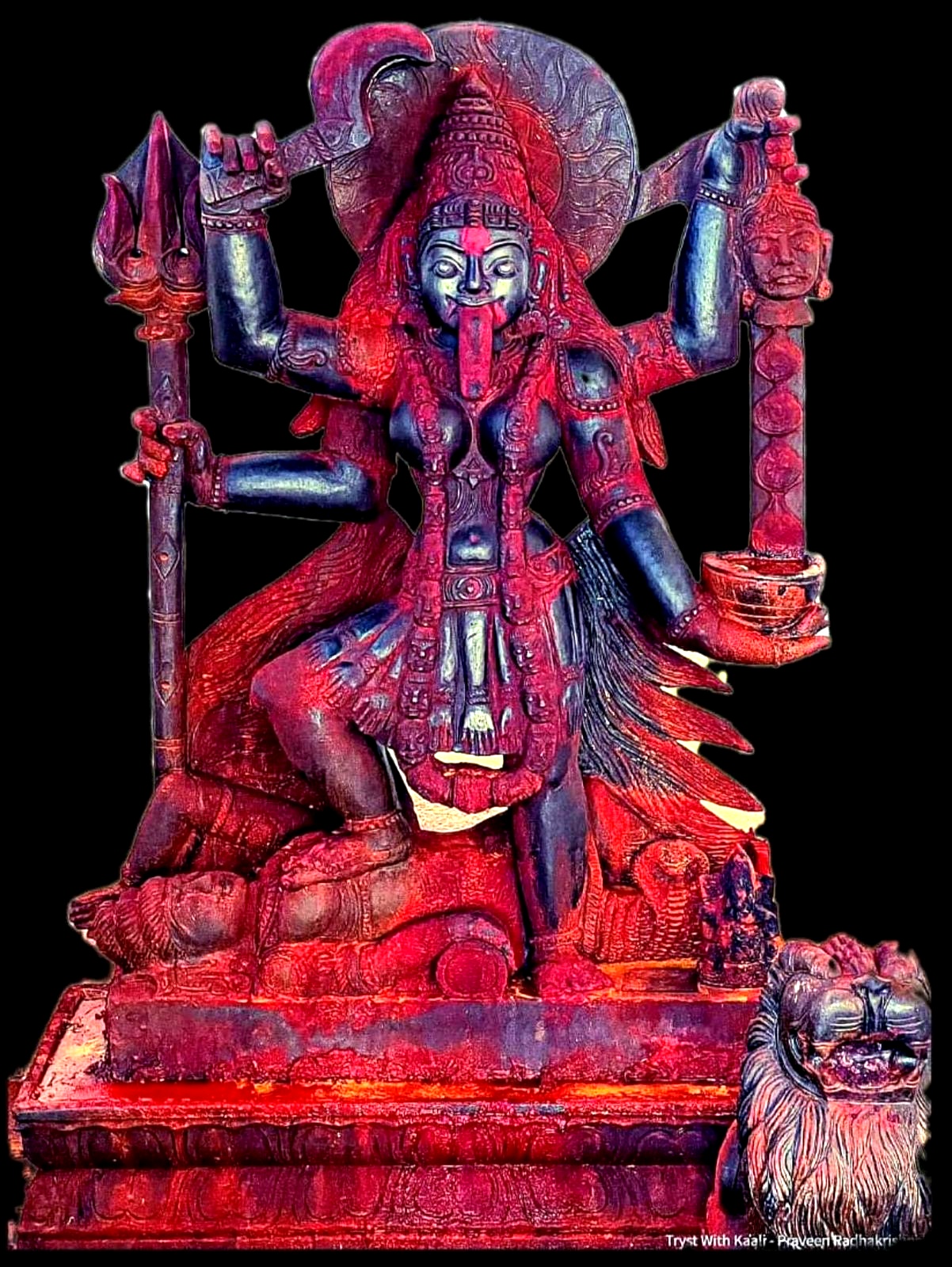
Here are the first 111 names of the Kakaradi Kali Sahasranama, with short devotional meanings in English. They are written for prayer, slow reading, japa preparation, and study.
The Kakārādi Kali Sahasranama opens with the sound-current of the letter ka and the fierce seed-sounds of the Dark Mother. In these early names, Ma Kali is approached through mantra, time, compassion, art, action, the lotus-heart, and the clarity that carries the devotee across.
These meanings may be used for:
- daily prayer and slow devotional reading
- japa preparation before Kali sadhana
- study of Kali tattva through divine epithets
- contemplation of mantra, Shakti, action, and the lotus-heart
These are devotional renderings, not a critical Sanskrit edition or word-for-word translation. The aim is simple: to help the reader stay with the bhava of each name while keeping the reverence and force of the sahasranama.
Compiled by KaliPutra_Ashish
How To Read These Names
You do not have to read all 111 names at once. Some devotees read one small group each day. Others stay with one name until its meaning begins to work inwardly.
In this opening section, the names move through a few main currents:
- seed-sound and mantra, especially krīṃ, krūm̐, and the letter ka
- divine art and subtle power, shown through the repeated kalā names
- the lotus-heart, shown through kamalā, kamalinī, and kañja names
- sacred action, shown through kara and karma names
- clear seeing, shown through the karāmalaka names
Read slowly. Let the meaning become prayer.
What Is Kakaradi Kali Sahasranama?
Sahasranama means a garland of one thousand names. The Kakaradi Kali Sahasranama is a sacred stream of Ma Kali's names in which the sound ka becomes central. For devotees, this is not only a list of titles. It is a way to approach the Mother through sound, meaning, form, symbol, and inner power.
These first 111 names carry the mood of mantra, sacred letters, divine creativity, compassion, lotus imagery, ritual action, and direct seeing.
Kakaradi Kali Sahasranama Names 1-111 with One-Line Meanings
Names 1-18
- krīṃ: The seed-sound of the Dark Goddess, calling Her power to transform, protect, and awaken.
- kālī: The Dark Goddess beyond time, death, and limitation, who grants fearless liberation.
- krūm̐: A fierce seed-sound of the Goddess, used to call protection, dissolution, and the cutting away of obstruction.
- karālī: The awe-inspiring Terrible One whose fierce presence destroys fear, falsehood, and spiritual darkness.
- kalyāṇī: The Auspicious One who brings blessing, well-being, protection, and the highest good.
- kamalā: The lotus-like Mother, radiant with purity, beauty, abundance, and inner unfolding.
- kalā: The subtle ray of creation, the art, phase, and power present in manifestation.
- kalāvatī: She who is rich in graces, arts, rays, and hidden powers.
- kalāḍhyā: She who is filled with every art, aspect, and creative power.
- kalāpūjyā: She who is worshipped through refined arts, offerings, and acts of devotion.
- kalātmikā: She whose nature is creativity, rhythm, beauty, and subtle force.
- kalādṛṣṭā: She who is seen by refined vision and inward spiritual insight.
- kalāpuṣṭā: She who is nourished by divine powers and nourishes the devotee's inner faculties.
- kalāmastā: She who is immersed in the fullness of rays, arts, and creative force.
- kalādharā: She who bears and supports all arts, phases, rays, and subtle powers.
- kalākoṭi: She who appears as countless rays, aspects, arts, and powers beyond measure.
- kalābhāsā: She who shines behind every art, phase, and subtle expression.
- kalākoṭiprapūjitā: She who is worshipped by countless rays, powers, arts, and divine forms.
Names 19-36
- kalākarmakalādhārā: She who supports action, art, and every subtle creative power.
- kalāpārā: She who is beyond all arts, forms, phases, and measurable powers.
- kalāgamā: She who is approached through sacred teaching, art, and the subtle powers of knowledge.
- kalādhārā: She who holds all arts, phases, rays, and subtle powers.
- kamalinī: The Lotus-like Goddess, graceful, radiant, and inwardly blossoming.
- kakārā: She who is the sacred letter "ka" itself, the seed of this entire stream of names.
- karuṇā: She who is compassion itself, the Mother's mercy flowing toward all beings.
- kaviḥ: She who is the seer-poet, the source of inspired wisdom, mantra, and sacred vision.
- kakāravarṇasarvāṅgī: She whose whole body is formed from the sacred letter "ka."
- kalākoṭivibhūṣitā: She who is adorned with countless rays, arts, aspects, and powers.
- kakārakoṭiguṇitā: She who multiplies Herself into countless forms of the sacred letter "ka."
- kalākoṭivibhūṣaṇā: She whose ornaments are countless arts, rays, and subtle powers.
- kakāravarṇahṛdayā: She whose heart is the sacred letter "ka."
- kakāramanumaṇḍitā: She who is adorned with the mantra of the sacred letter "ka."
- kakāravarṇanilayā: She who dwells in the sacred letter "ka," and in whom that sound finds its home.
- kākaśabdaparāyaṇā: She who is absorbed in the crow-like sacred sound, the cry of omens, ancestors, and the cremation ground.
- kakāravarṇamukuṭā: She whose crown is the sacred letter "ka."
- kakāravarṇabhūṣaṇā: She who is adorned by the sacred letter "ka" as Her ornament.
Names 37-54
- kakāravarṇarūpā: She whose very form is the sacred letter "ka."
- kakaśabdaparāyaṇā: She who is absorbed in the repeated "ka-ka" sound, the vibration of practice itself.
- kakavīrāsphālaratā: She who delights in the heroic bursting forth of the "ka" sound, where mantra-power breaks open.
- kamalākarapūjitā: She who is worshipped in the lotus-abode, the lake where devotion blossoms.
- kamalākaranāthā: She who is the sovereign Lady of the lotus-abode, ruler of the heart's unfolding.
- kamalākararūpadhṛk: She who takes the form of the lotus-lake, where purity opens into wisdom.
- kamalākarasiddhisthā: She who abides in the perfection of the lotus-heart.
- kamalākarapāradā: She who carries devotees beyond through the lotus-abode of grace.
- kamalākaramadhyasthā: She who stands at the center of the inner lotus-lake, still and luminous.
- kamalākaratoṣitā: She who is pleased by the blossoming lotus-heart of the devotee.
- kathaṅkāraparālāpā: She whose speech arises as the question "How?", stirring the soul's longing to know Truth.
- kathaṅkāraparāyaṇā: She who is absorbed in holy inquiry, guiding curiosity toward wisdom.
- kathaṅkārapadāntasthā: She who stands at the limit of the question "How?", where reasoning gives way to inner sight.
- kathaṅkārapadārthabhūḥ: She who is the meaning hidden within that question, revealed when inquiry ripens.
- kamalākṣī: She whose lotus-like eyes are filled with compassion and grace.
- kamalajā: She who is lotus-born, arising from purity, beauty, and spiritual light.
- kamalākṣaprapūjitā: She who is deeply worshipped by the Lotus-Eyed One and by all whose vision has been purified.
- kamalākṣavarodyuktā: She who is ready to grant the highest boon to the lotus-eyed devotee.
Names 55-72
- kakārā: She who is the sacred letter "ka" itself, the seed-sound of this stream.
- karburākṣarā: She whose letters are variegated and mysterious, carrying hidden powers.
- karatārā: She who carries devotees across by Her hand of grace.
- karacchinnā: She who cuts bondage with Her hand, severing what binds the soul.
- karaśyāmā: She whose hands are dark and powerful, blessing and protecting with the force of Kālī.
- karārṇavā: She who is an ocean of hands, actions, rays, and blessings.
- karapūjyā: She who is worshipped by the hands, through offering, service, gesture, and devotion.
- kararatā: She who delights in the hands that serve, worship, and surrender.
- karadā: She whose hand gives blessing, protection, support, and spiritual power.
- karapūjitā: She who is worshipped through offerings, mudrās, and acts of love.
- karatoyā: She who is the ritual water of the hand, the stream of blessing poured in worship.
- karāmarṣā: She who purifies by Her touch, removing impurity through grace.
- karmanāśā: She who destroys the binding force of action and its results, freeing the soul from karmic burden.
- karapriyā: She who loves sincere action offered through the devotee's hands.
- karaprāṇā: She whose hands carry life, blessing, and protection.
- karakajā: She who arises wherever action becomes offering.
- karakā: She who turns the hand itself into a vessel of worship.
- karakāntarā: She who dwells in the inner space of action, guiding work toward holiness.
Names 73-90
- karakācalarūpā: She whose form is the hidden mountain-seat of power, steady within the heart.
- karakācalaśobhinī: She who shines from that secret seat, making inner strength radiant.
- karakācalaputrī: She who arises from the hidden mountain-seat, born from immovable power.
- karakācalatoṣitā: She who is pleased by worship offered from a firm seat of devotion.
- karakācalagehasthā: She who abides in the secret dwelling of unshakable power.
- karakācalarakṣiṇī: She who protects the hidden seat of strength within the devotee.
- karakācalasammānyā: She who is honored there by those who know Her hidden power.
- karakācalakāriṇī: She who acts through that hidden seat, making steadiness active in the world.
- karakācalavarṣāḍhyā: She who pours blessings from the secret mountain-seat.
- karakācalarañjitā: She who is colored by the joy, beauty, and power of that hidden seat.
- karakācalakāntārā: She who is the wilderness around the secret mountain-seat, where fear turns toward devotion.
- karakācalamālinī: She who is garlanded with the powers of that hidden seat.
- karakācalabhojyā: She who is both offering and enjoyment in the secret seat of power.
- karakācalarūpiṇī: She whose nature is that hidden, unshakable seat.
- karāmalakasaṃsthā: She who makes truth as immediate as something resting in the palm.
- karāmalakasiddhidā: She who grants accomplishment with the clarity of fruit held in the hand.
- karāmalakasampūjyā: She who is worshipped through clear seeing, when devotion becomes simple and undeniable.
- karāmalakatāriṇī: She who carries devotees across by revealing liberation as something close and certain.
Names 91-108
- karāmalakakālī: The Dark Goddess who reveals Herself clearly, no longer hidden from the heart.
- karāmalakarocinī: She who shines with the brightness of direct knowing.
- karāmalakamātā: The Mother who makes truth simple, immediate, and unmistakable.
- karāmalakasevinī: She who is served through clear awareness and direct devotion.
- karāmalakabaddhyeyā: She who is to be meditated upon as directly present, as clear as something in one's hand.
- karāmalakadāyinī: She who gives the fruit of realization without confusion.
- kañjanetrā: She whose lotus-like eyes gaze with beauty, purity, and grace.
- kañjagatiḥ: She whose movement is lotus-like, guiding the heart toward its own unfolding.
- kañjasthā: She who abides in the lotus, dwelling in the awakened heart.
- kañjadhāriṇī: She who bears the lotus as Her sign of purity and spiritual beauty.
- kañjamālāpriyakarī: She who lovingly accepts garlands of lotuses offered in devotion.
- kañjarūpā: She whose form is the lotus, radiant with beauty and awakened wisdom.
- kañjanā: She who is lotus-like, shining with grace.
- kañjajātiḥ: She who belongs to the lotus lineage of purity, beauty, and unfolding wisdom.
- kañjagatiḥ: She whose path is lotus-like, leading devotees into the heart's awakening.
- kañjahomaparāyaṇā: She who is devoted to lotus fire-offerings, receiving devotion through ritual flame.
- kañjamaṇḍalamadhyasthā: She who stands at the center of the lotus mandala, the still heart of beauty.
- kañjābharaṇabhūṣitā: She who is adorned with lotus ornaments and awakened purity.
Names 109-111
- kañjasammānaniratā: She who delights in honoring the lotus wherever it blossoms.
- kañjotpattiparāyaṇā: She who is devoted to the arising of the lotus, awakening purity in the heart.
- kañjarāśisamākārā: She whose appearance is like a field of lotuses, radiant with grace.
A Simple Way To Contemplate These Names
The first 111 names move like a gradual unfolding. They begin with seed-sound, enter the mystery of Kali beyond time, expand into art and subtle power, then settle into the lotus-heart, sacred action, and clear seeing.
For contemplation, you may read them in five currents:
- Kali as Mantra: krīṃ, krūm̐, and ka reveal the Mother as living sound.
- Kali as Creative Power: the kalā names show Her as art, rhythm, phase, and divine ray.
- Kali as Compassion: karuṇā reveals the Mother as mercy itself.
- Kali as Sacred Action: the kara names turn the hand, offering, and work into worship.
- Kali as Lotus Wisdom: the kañja names reveal purity blooming in the heart.
When read with devotion, these names become more than meaning. They become a way of staying near the Mother.
Why Devotees Read Kali Sahasranama Names in English
Many devotees want to understand what they are chanting. English meanings can support devotion by giving the heart a clear direction. Even when the mantra is kept in Sanskrit or romanized Sanskrit, the meaning helps the mind remember who is being invoked.
This is especially useful for seekers who are beginning Kali upasana, studying Ma Kali's names, or trying to understand the symbols of lotus, hand, action, sound, and direct seeing in the sahasranama.
Quick FAQ
What is the Kakaradi Kali Sahasranama?
It is a sacred thousand-name hymn of Ma Kali in which the sound-current of the letter ka is central. Devotees use it for worship, japa, study, and contemplation.
Are these all 1000 names of Kali?
No. This article covers names 1-111 only. It is the opening section of the Kakaradi Kali Sahasranama.
Can I read these names in English for devotion?
Yes. English meanings can be used as a devotional aid, especially when you want to understand the qualities of Ma Kali being remembered through each name.
Is this a strict Sanskrit translation?
No. These are devotional one-line meanings meant for prayerful reading and contemplation, not a formal academic translation.
Closing Reflection
The opening names of the Kakaradi Kali Sahasranama show Ma Kali as mantra, Mother, art, compassion, action, lotus, and clear realization. They begin in sound and end in a field of lotuses, as if the fierce seed of the Mother opens into the heart's own purity.
Read them slowly. Let one name stay with you. Let that name become remembrance.
Jai Ma Adya. Jai Kalabhairava. Jai Khyapa Parampara.