Om Shri Gurubhyo Namah, Jai Ma Adya, Jai Khyapa Parampara.
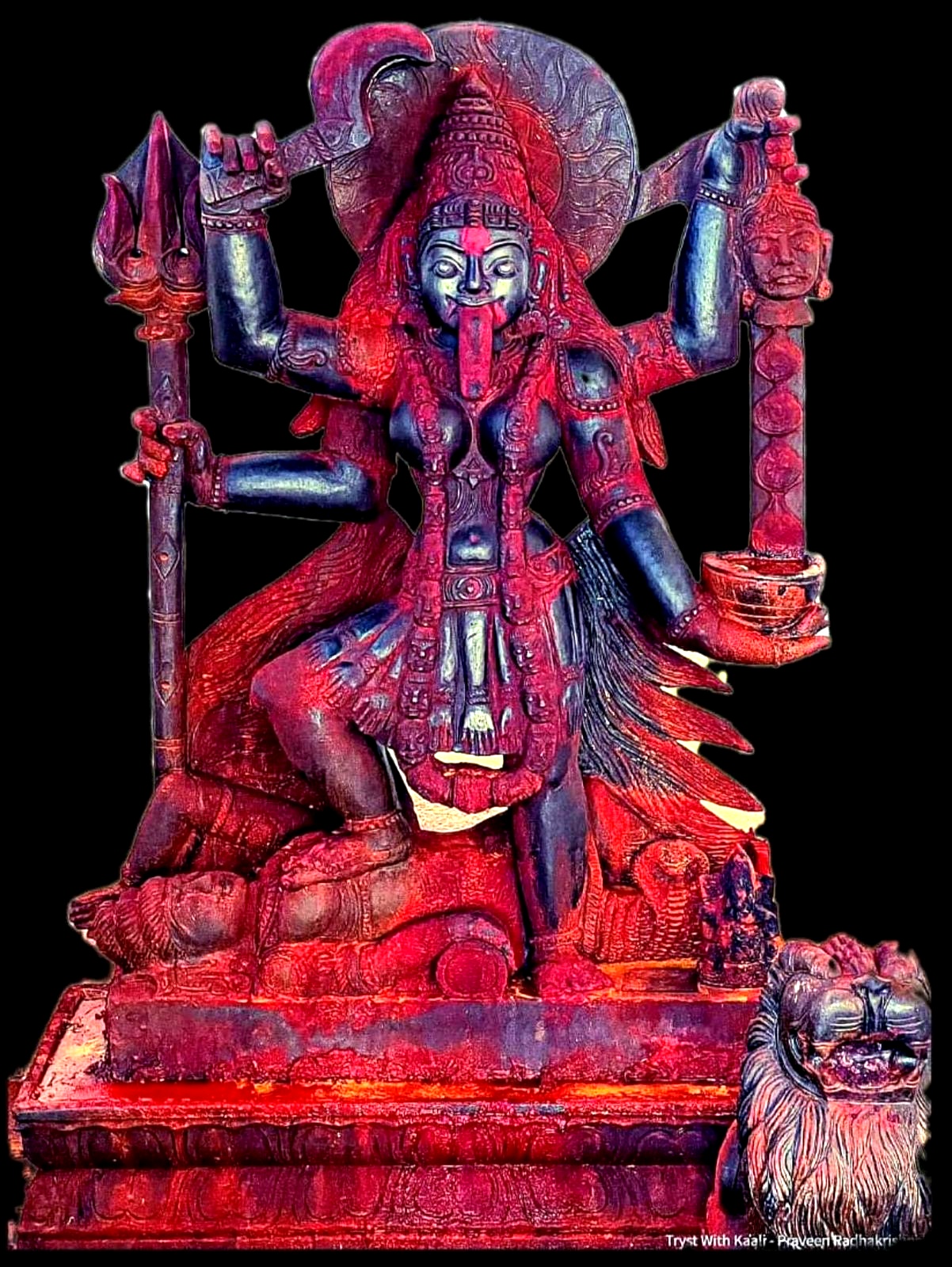
This page continues the Kakaradi Kali Sahasranama with names 112-222, giving each name a short devotional meaning in English. After the lotus names, the hymn moves into groves and trees, sword-wisdom, skull and cremation-ground symbols, inspired poetry, sacred darkness, and the inner power of hearing.
If you are beginning from the start, first read Kakaradi Kali Sahasranama Names 1-111 with One-Line Meanings.
The Kakārādi Kali Sahasranama is more than a list to recite quickly. For devotees, each name opens a way of remembering Ma Kali. Some names feel gentle and fragrant. Others are fierce, even uncomfortable, because they speak directly of death, ego, impermanence, and liberation.
You can use these meanings for:
- daily prayer and slow devotional reading
- japa preparation before Kali sadhana
- study of Kali tattva through divine epithets
- contemplation of sword, skull, sacred grove, poetry, darkness, and inner hearing
These are devotional renderings, not a critical Sanskrit edition or a word-for-word translation. I have kept the focus on bhava: enough meaning for prayer, study, and contemplation without turning the names into dry notes.
Compiled by KaliPutra_Ashish
How To Read These Names
You do not have to finish all 111 names in one sitting. Some devotees read one small group a day. Others stay with one name, repeat it inwardly, and let the meaning slowly become prayer.
This section moves through a few strong currents:
- sacred groves and trees, shown through kañja, karañja, kadalī, and kadamba names
- the sword of wisdom, shown through the karavāla names
- cremation-ground symbolism, shown through kabandha and kapāla names
- poetry and inspired speech, shown through the kavi and kavitva names
- sacred darkness and protection, shown through the kajjala names
- inner hearing, shown through the karṇa names near the end
Read slowly, and let the meaning turn into remembrance.
What Is Kakaradi Kali Sahasranama?
Sahasranama means a garland of one thousand names. The Kakaradi Kali Sahasranama is a sacred stream of Ma Kali's names where the sound ka becomes central. Devotees approach the Mother through sound, meaning, image, symbol, and the inner power carried by the name.
Names 112-222 deepen the movement begun in the earlier section. The lotus opens into forest and sacred nature. The hand becomes a sword. Gentle imagery gives way to cremation-ground wisdom. Then the same Mother appears as poetry, sacred blackness, fruitfulness, art, conflict, and the subtle message heard in the heart.
Kakaradi Kali Sahasranama Names 112-222 with One-Line Meanings
Names 112-126
- kañjāraṇyanivāsinī: Dwelling in the lotus forest, She moves through the many blossoms of awakened devotion.
- karañjavṛkṣamadhyasthā: Standing in the Indian beech tree, She makes nature feel like a living shrine.
- karañjavṛkṣavāsinī: She dwells in the Indian beech tree, turning the forest itself into a seat of presence.
- karañjaphalabhūṣāḍhyā: Adorned with Indian beech fruits, She wears the simple wealth of the sacred grove.
- karañjāraṇyavāsinī: She lives in the Indian beech forest and blesses hidden places of worship and retreat.
- karañjamālābharaṇā: Wearing a garland from the Indian beech tree, She receives the forest's offering.
- karavālaparāyaṇā: She is devoted to the sword, the sharp wisdom that cuts bondage.
- karavālaprahṛṣṭātmā: Her heart rejoices in the sword of wisdom and the cutting away of ignorance.
- karavālapriyā: She loves the sword, the blade of clarity that severs fear and delusion.
- gatiḥ: She is the devotee's path, refuge, movement, and final goal.
- karavālapriyā: Beloved of the sword, She cuts through falsehood with liberating force.
- kanyā: She is the Maiden Goddess: pure, fresh, self-radiant, and untouched.
- karavālavihāriṇī: She moves and plays with the sword, wielding fierce wisdom freely.
- karavālamayī: She is made of the sword, the sharp power that cuts through bondage.
- karmā: She is sacred action itself, the power moving through every deed and its fruit.
Names 127-144
- karavālapriyaṅkarī: She makes the sword dear and auspicious, changing fierce clarity into grace.
- kabandhamālābharaṇā: Adorned with a garland of headless corpse-forms, She shows victory over ego, pride, and death.
- kabandharāśimadhyagā: She moves among heaps of headless bodies, fearless where bodily pride has ended.
- kabandhakūṭasaṃsthānā: Established upon a peak of corpse-forms, She is enthroned above the fall of ego.
- kabandhānantabhūṣaṇā: Endless corpse-forms become Her ornaments, signs of Her conquest over death.
- kabandhanādasantuṣṭā: She is pleased by the cremation-ground sounds where ego and body-pride dissolve.
- kabandhāsanadhāriṇī: She bears the seat of headless corpse-forms and rests in the mystery beyond death.
- kabandhagṛhamadhyasthā: She stands in the house of corpse-forms, present at the center of death's teaching.
- kabandhavanavāsinī: She dwells in the forest of corpse-forms, guiding the fearless on the cremation-ground path.
- kabandhakāñcīkaraṇī: She fashions a girdle from corpse-forms, wearing the defeat of ego as an ornament.
- kabandharāśibhūṣaṇā: Heaps of corpse-forms adorn Her, and mortality loses its hold before Her.
- kabandhamālājayadā: Through the garland of corpse-forms, She grants victory over the fear of death.
- kabandhadehavāsinī: She dwells in the headless corpse-body, where consciousness remains after ego falls silent.
- kabandhāsanamānyā: Honored upon the corpse-seat, She is worshipped as the power beyond death.
- kapālākalpadhāriṇī: She wears the full array of skull ornaments, carrying wisdom beyond mortality.
- kapālamālāmadhyasthā: She stands within the skull garland, in the cremation-ground circle of liberation.
- kapālavratatoṣitā: She is pleased by the skull-vow, a discipline that faces mortality without turning away.
- kapāladīpasantuṣṭā: She is pleased by the skull-lamp, where the light of wisdom shines through death.
Names 145-162
- kapāladīparūpiṇī: Her form is the skull-lamp, lighting the way beyond fear and decay.
- kapāladīpavaradā: Through the skull-lamp, She grants boons and insight beyond the fear of death.
- kapālakajjalasthitā: She abides in the dark collyrium of the skull-rite, a protective mark of cremation-ground wisdom.
- kapālamālājayadā: Through the skull garland, She gives victory over ego, fear, and death.
- kapālajapatoṣiṇī: She is pleased by mantra repetition that keeps impermanence and freedom before the mind.
- kapālasiddhisaṃhṛṣṭā: She rejoices in skull-accomplishment, the realization born from fearless practice.
- kapālabhojanodyatā: She is ready to receive skull-bowl offerings, accepting the devotee's fearless worship.
- kapālavratasaṃsthānā: She is established in the skull-vow, the discipline of facing truth completely.
- kapālakamalālayā: She dwells in the skull-lotus, where mortality opens into awakening.
- kavitvāmṛtasārā: She is the essence of poetry's nectar, the sweetness inside inspired speech.
- kavitvāmṛtasāgarā: She is the ocean of poetry's nectar, the source from which inspired expression rises.
- kavitvasiddhisaṃhṛṣṭā: She rejoices when poetry is fulfilled and blesses the devotee with inspired voice.
- kavitvādānakāriṇī: She gives the gift of poetry, sacred insight, and clear expression.
- kavipṛjyā: Poets and seers worship Her as the source of their inspiration.
- kavigatiḥ: For poets and seers, She is the path, refuge, and final goal.
- kavirūpā: Her form is the poet-seer, speaking wisdom through awakened hearts.
- kavipriyā: She loves poets and seers, and they love Her as the source of sacred speech.
- kavibrahmānandarūpā: Her form is the divine bliss poets taste in awakened vision.
Names 163-180
- kavitvavratatoṣitā: She is pleased by the vow of poetry, sacred speech, and inspired expression.
- kavimānasasaṃsthānā: She is established in the minds of poets and seers as living inspiration.
- kavivāñchāprapūriṇī: She fulfills the deep longings of poets and seers.
- kavikaṇṭhasthitā: She abides in the poet's throat as sacred voice, mantra, and inspired utterance.
- kaṃhrīṃkaṃkaṃkaṃkavipūrtidā: Through the sound-sequence kaṃ hrīṃ kaṃ kaṃ kaṃ, She grants poetic fulfillment.
- kajjalā: She is dark like sacred black kohl: beautiful, protective, and fierce.
- kajjalādānamānasā: Her mind delights in the offering and application of sacred black kohl.
- kajjalapriyā: She loves sacred black kohl, the dark mark of beauty and protection.
- kapālakajjalasamā: She is like the black kohl of the skull-rite, dark with wisdom beyond death.
- kajjaleśaprapūjitā: Even a tiny speck of sacred black kohl becomes enough for full worship of Her.
- kajjalārṇavamadhyasthā: She stands in the vast ocean of sacred darkness, deep as black kohl.
- kajjalānandarūpiṇī: Her form is the bliss of sacred blackness, protective darkness, and fierce beauty.
- kajjalapriyasantuṣṭā: She is satisfied by devotion offered through the beloved dark mark of protection.
- kajjalapriyatoṣiṇī: Love for sacred black kohl and its protective power pleases Her.
- kapālamālābharaṇā: Wearing a garland of skulls, She carries wisdom beyond mortality.
- kapālakarabhūṣaṇā: Skulls adorn Her hands, showing mastery over death.
- kapālakarabhūṣāḍhyā: Richly adorned with skulls in Her hands, She shines with cremation-ground power.
- kapālacakramaṇḍitā: She is adorned with the skull-circle, the mandala where death is turned toward wisdom.
Names 181-198
- kapālakoṭinilayā: She dwells among countless skulls and fills every sign of mortality with liberation.
- kapāladurgakāriṇī: She creates the skull-fortress, protection formed from wisdom beyond death.
- kapālagirisaṃsthānā: Established upon the skull-mountain, She remains unmoved in cremation-ground realization.
- kapālacakravāsinī: She dwells in the skull-circle, the ritual mandala of transcendence.
- kapālapātrasantuṣṭā: She is pleased by the skull-bowl and receives offerings beyond fear and convention.
- kapālārghyaparāyaṇā: She is wholly devoted to sacred offerings made with the skull-bowl.
- kapālārghyapriyaprāṇā: Skull-bowl offerings are dear to Her as life itself.
- kapālārghyavarapradā: Through skull-bowl offerings, She grants excellent boons.
- kapālacakrarūpā: Her form is the skull-circle, the mandala where death becomes wisdom.
- kapālarūpamātragā: She pervades the very essence of the skull-form, showing liberation inside mortality.
- kadalī: She is the sacred banana or plantain, fruitful, nourishing, and full of living power.
- kadalīrūpā: Her form is the banana or plantain, generous with shelter, flower, and fruit.
- kadalīvanavāsinī: She dwells in the banana grove, blessing hidden places of growth and abundance.
- kadalīpuṣpasamprītā: Banana flowers offered with devotion delight Her.
- kadalīphalamānasā: Her mind rests on the fruit of the banana plant, the ripe fruit of worship.
- kadalīhomasantuṣṭā: She is pleased by fire-offerings made with the banana or plantain plant.
- kadalīdarśanodyatā: She is ready to reveal Herself through the sight of the fruitful banana plant.
- kadalīgarbhamadhyasthā: She dwells in the inner core of the banana plant, hidden within living abundance.
Names 199-216
- kadalīvanasundarī: She is the beautiful Goddess of the banana grove, shining with fertility and nourishment.
- kadambapuṣpanilayā: She dwells in fragrant kadamba blossoms and fills the flower with presence.
- kadambavanamadhyagā: She moves through the kadamba forest as living sacred beauty.
- kadambakusumāmodā: The fragrance and joy of kadamba blossoms delight Her.
- kadambavanatoṣiṇī: She is pleased by the kadamba forest, a grove made holy by Her presence.
- kadambapuṣpasampūjyā: Kadamba flowers become a complete offering in Her worship.
- kadambapuṣpahomadā: She grants the fruit of fire-offerings made with kadamba flowers.
- kadambapuṣpamadhyasthā: She stands among kadamba flowers, at the heart of their offering.
- kadambaphalabhojinī: She enjoys the fruit of the kadamba tree, accepting the ripened sweetness of devotion.
- kadambakānanāntaḥsthā: She abides deep within the kadamba grove, hidden in the forest of worship.
- kadambācalavāsinī: She dwells upon the kadamba-covered mountain, enthroned in fragrant sacred nature.
- kacchapā: She is turtle-like: steady, self-contained, and supportive of the worlds.
- kacchapārādhyā: She is worshipped through the turtle, a sign of steadiness, withdrawal, and deep support.
- kacchapāsanasaṃsthitā: Seated upon the turtle, She rests on firm spiritual support.
- karṇapūrā: She fills the ears with sacred sound, mantra, and divine hearing.
- karṇanāsā: Present in the ear and nose, She sanctifies hearing, breath, scent, and subtle perception.
- karṇāḍhyā: She is rich in the power of sacred hearing and subtle listening.
- kālabhairavī: She is the feminine power of Kālabhairava, the fierce Lord of Time and wisdom beyond death.
Names 217-222
- kalaprītā: She is pleased by sacred art, beauty, subtle power, and refined offering.
- kalahadā: She brings hidden conflict to the surface so it can be faced, purified, and transformed.
- kalahā: She appears as conflict itself, the friction through which awakening becomes real.
- kalahāturā: Stirred by the urgency of conflict, She drives the soul beyond avoidance into transformation.
- karṇayakṣī: She appears as the subtle guardian-spirit of the ear, giving hidden guidance through sacred hearing.
- karṇavārtā: She is the holy message heard within, carrying divine instruction into the devotee's heart.
A Simple Way To Contemplate These Names
Names 112-222 carry a stronger cremation-ground current than the opening section. The lotus and forest imagery remain, but the Mother also comes through the sword, skull, corpse-seat, skull-bowl, sacred blackness, and the difficult symbols that dissolve ego.
For contemplation, you can read them through six currents:
- Kali as Sacred Nature: the kañja, karañja, kadalī, and kadamba names show the Mother living in groves, flowers, fruits, and hidden forest shrines.
- Kali as Sword-Wisdom: the karavāla names reveal Her as the blade that cuts bondage, confusion, and fear.
- Kali as Death-Transcending Power: the kabandha and kapāla names point to the cremation ground, where body-pride and ego fall away.
- Kali as Inspired Speech: the kavitva and kavi names reveal Her as poetry, mantra, sacred voice, and awakened expression.
- Kali as Sacred Darkness: the kajjala names show the protective beauty of divine blackness.
- Kali as Inner Hearing: the karṇa names turn the devotee inward toward subtle sound, breath, and the message of the heart.
When they are read with devotion, the fierce names do not remain only frightening. They become instruction. They ask the devotee to look directly at impermanence, cut through falsehood, and listen for the Mother's guidance within.
Why These Fierce Kali Names Matter
Many names in this section refer to skulls, corpse-forms, skull-bowls, and cremation-ground imagery. In Kali worship, these symbols are not there for casual shock. They point to a serious spiritual truth: everything temporary has to be seen clearly, and the ego cannot move toward freedom while clinging to body-pride, fear, and illusion.
The Mother who dwells in flowers also stands in the cremation ground. The Mother who gives poetry also carries the sword. The Mother who appears as sacred darkness also becomes the message heard within.
Quick FAQ
What is the Kakaradi Kali Sahasranama?
It is a sacred thousand-name hymn of Ma Kali in which the sound-current of the letter ka is central. Devotees use it in worship, japa, study, and contemplation.
Are these all 1000 names of Kali?
No. This article covers names 112-222 only. It continues the Kakaradi Kali Sahasranama after the opening names 1-111.
Why are there skull and corpse images in these names?
These images belong to Kali's fierce cremation-ground symbolism. Devotionally, they point to the destruction of ego, fear, body-pride, and attachment to impermanent forms.
Can I read these names in English for devotion?
Yes. English meanings can support devotional reading, especially when the Sanskrit name is kept visible and the meaning helps the mind stay connected to Ma Kali's form and power.
Is this a strict Sanskrit translation?
No. These are devotional one-line meanings meant for prayerful reading and contemplation, not a formal academic translation.
Related Reading
Continue the Kakaradi Kali Sahasranama study in order:
- Previous section: Kakaradi Kali Sahasranama Names 1-111 with One-Line Meanings
- This section: Names 112-222 with one-line devotional meanings
Closing Reflection
Names 112-222 of the Kakaradi Kali Sahasranama show Ma Kali as forest-dweller, sword, skull-lamp, poet's voice, sacred darkness, nourishing grove, Kālabhairavī, and the holy message heard within.
This section asks the devotee to hold beauty and fearlessness together. The flowers are Hers. The sword is Hers. The skull is Hers. The voice of poetry is Hers. The inner instruction is Hers.
Read slowly. Let one name stay with you. Let that name become remembrance.
Jai Ma Adya. Jai Kalabhairava. Jai Khyapa Parampara.