Om Shri Gurubhyo Namah, Jai Ma Adya, Jai Khyapa Parampara.
88. Kahala-Adi-Maha-Vaadya-Atala-Taandava-Laalasaya
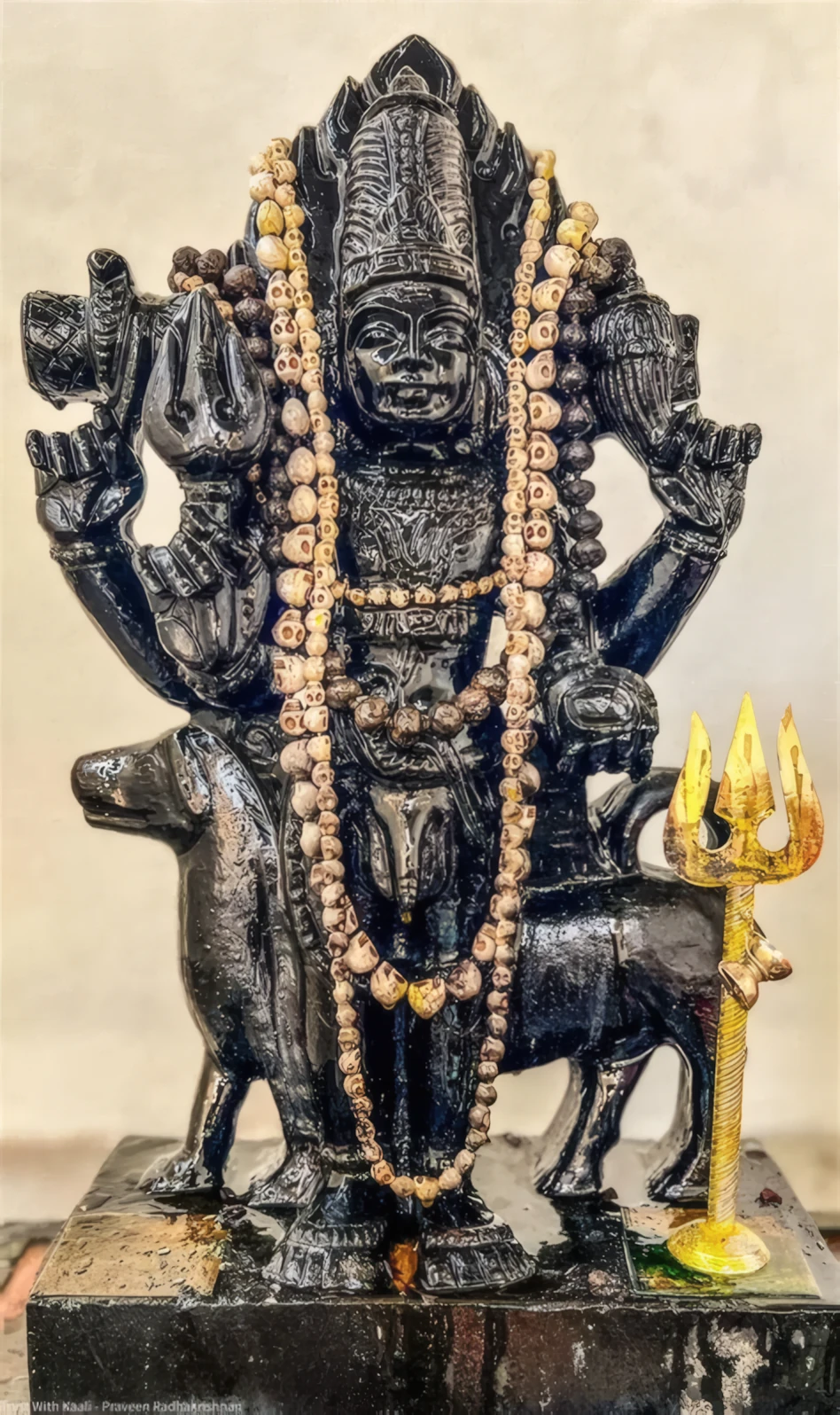
He Who Delights in the Great Tandava of Dissolution, Accompanied by Mighty Instruments.
The eighty-eighth name, Kahala-Adi-Maha-Vaadya-Atala-Taandava-Laalasaya, is filled with movement, sound, and sacred force. It presents Lord Kalabhairava not in stillness, but in the ecstatic grandeur of the cosmic dance. Here the atmosphere is immense: dissolution is underway, great instruments resound, and Bhairava delights in the tandava that gathers the universe back into its source.
Elaboration
The name is a long and vivid compound. Kahala-adi points to great instruments such as the kahala and others of that class. Maha-vaadya intensifies the idea, suggesting mighty or grand musical accompaniment. Taandava is the vigorous cosmic dance associated with Shiva. Laalasaya means one who delights in, longs for, or takes profound joy in something. Together the title praises Kalabhairava as the one who rejoices in the great tandava accompanied by resounding instruments.
The Tandava of Dissolution
Tandava is not ordinary motion. It is the divine dance through which cosmic processes are expressed. In this name the emphasis falls on dissolution, the phase in which forms are withdrawn and the manifested universe is reabsorbed. This is not meaningless destruction. It is sacred transition, the clearing away of what has reached completion so that reality may return to its unmanifest depth before new creation emerges.
The Sound of the Great Instruments
The mention of the kahala and other mighty instruments gives the name a ceremonial and apocalyptic texture at once. The kahala is imagined as a large horn or trumpet-like instrument, resonant enough to summon, proclaim, and overwhelm. When joined with maha-vaadya, the sense becomes unmistakably cosmic. The dance is not private. It resounds through the worlds. The sound itself becomes part of the revelation that time is ending, order is shifting, and divine power is in motion.
Delight in the Cosmic Process
The word Laalasaya is especially important. Bhairava does not perform the dance reluctantly. He delights in it. That delight does not imply cruelty. Rather, it reveals divine freedom. From the human point of view dissolution is frightening because it means the loss of form and certainty. From the divine point of view it is part of the eternal rhythm. Bhairava's delight shows complete mastery over creation and dissolution alike.
What This Means for the Devotee
To meditate on Kahala-Adi-Maha-Vaadya-Atala-Taandava-Laalasaya is to contemplate a form of Bhairava that teaches courage in the face of endings. The name reminds the seeker that dissolution is not outside the sacred order. Even collapse, when seen rightly, can belong to divine rhythm. Bhairava's dance does not celebrate chaos for its own sake. It reveals the fierce joy by which the old is cleared and the timeless remains.
Spiritual Insight
Contemplating Kahala-Adi-Maha-Vaadya-Atala-Taandava-Laalasaya invites the seeker to meet endings with reverence, hearing even the thunder of dissolution as part of Bhairava's divine rhythm.