Om Shri Gurubhyo Namah, Jai Ma Adya, Jai Khyapa Parampara.
83. Kala-Paryaya-Mula-Sthaya
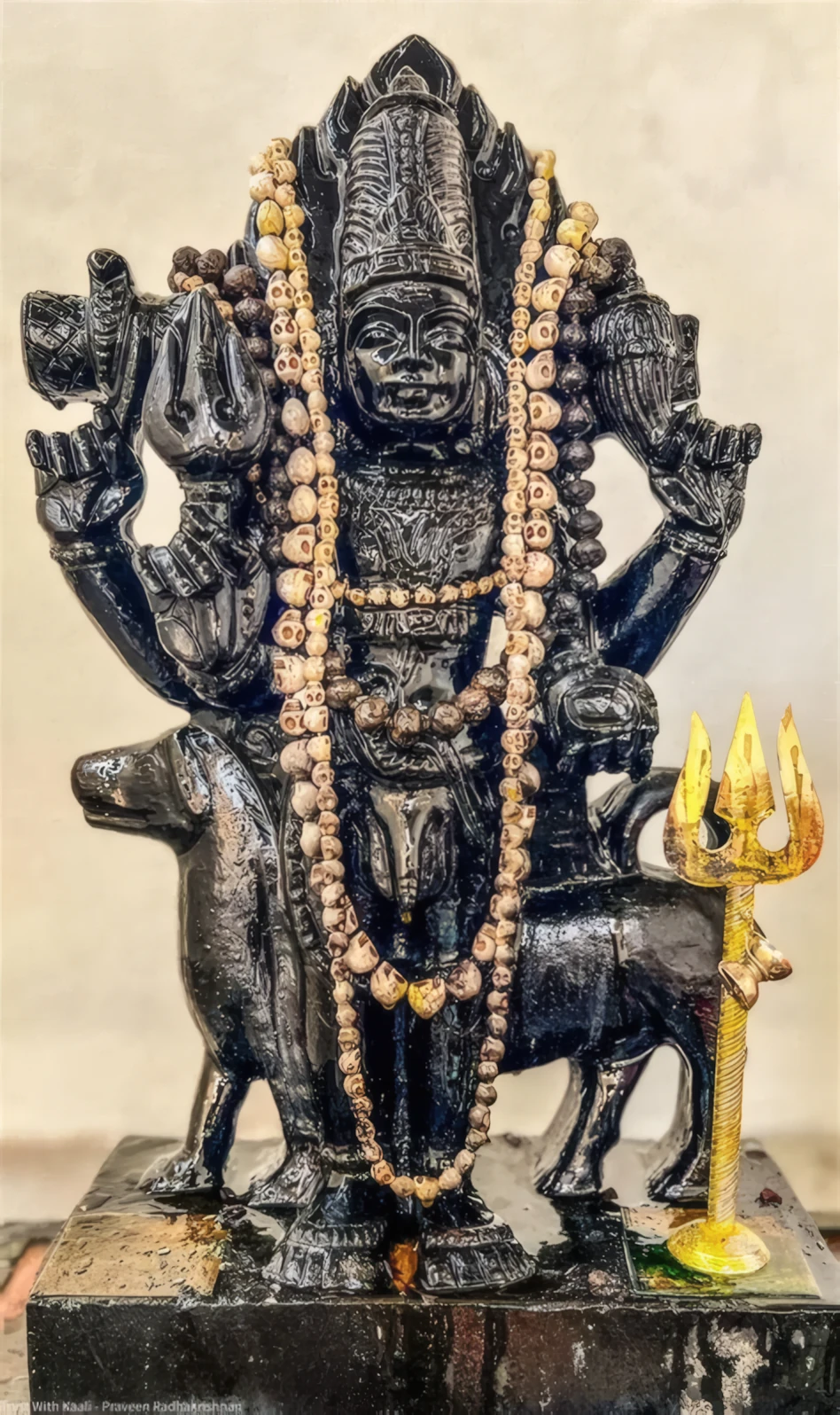
The Root of the Cycles of Time and Transformation.
The eighty-third name, Kala-Paryaya-Mula-Sthaya, takes the mind straight into the mystery of time. It presents Lord Kalabhairava not only as the ruler of time, but as the hidden root from which its cycles arise. Days and nights, birth and death, creation and dissolution, growth and decline all move in turning rhythms. This name teaches that those rhythms are not ultimate in themselves. Their source rests in Bhairava.
Elaboration
The name may be unfolded as follows: kala means time, paryaya suggests cycles, turns, or recurring phases, mula means root or source, and sthaya points to one who abides or remains established. Together the title praises Kalabhairava as the abiding source behind the recurring transformations of time.
The Cycles of Time
Time in Hindu thought is rarely imagined as a straight line alone. It moves in repeating currents: dawn follows night, seasons return, lives unfold, worlds arise and dissolve. These recurring phases are captured in the word paryaya. By linking Bhairava to their root, the name says something profound: he is not merely moving with the wheel of time; he stands beneath it as its source.
The Root of Transformation
If time moves in cycles, then all change belongs to those cycles. Birth leads toward growth, fullness leads toward decline, and dissolution clears the ground for renewal. In that sense Bhairava is also the source of transformation itself. Every shift in form, every ending, and every beginning stands within the field of his power. This gives the name both a philosophical depth and a devotional tenderness, because change is no longer meaningless flux. It is held within sacred order.
The One Who Abides While All Else Changes
The final part of the name, sthaya, adds an important paradox. Bhairava is the root of movement, yet he also abides. The world changes, but he remains. Time flows, but he is not swept away by it. This is one of the deepest Shaiva insights: the Divine is both the source of cosmic process and the changeless ground that supports it. The devotee therefore learns to look beyond passing appearances toward the stable reality in which they arise.
What This Means for the Devotee
To meditate on Kala-Paryaya-Mula-Sthaya is to soften one's fear of change. What is born will pass, and what passes may return in another form. But underneath these movements there is an abiding presence. Bhairava is that presence. Remembering this can steady the heart in times of uncertainty, loss, transition, or waiting. The name does not deny impermanence; it reveals the eternal source from which impermanence unfolds.
Spiritual Insight
Contemplating Kala-Paryaya-Mula-Sthaya helps the seeker rest in the abiding source beneath all change, rather than being overwhelmed by the turning of time.