Om Shri Gurubhyo Namah, Jai Ma Adya, Jai Khyapa Parampara.
30. Kaamaniya-Jata-Dharaya
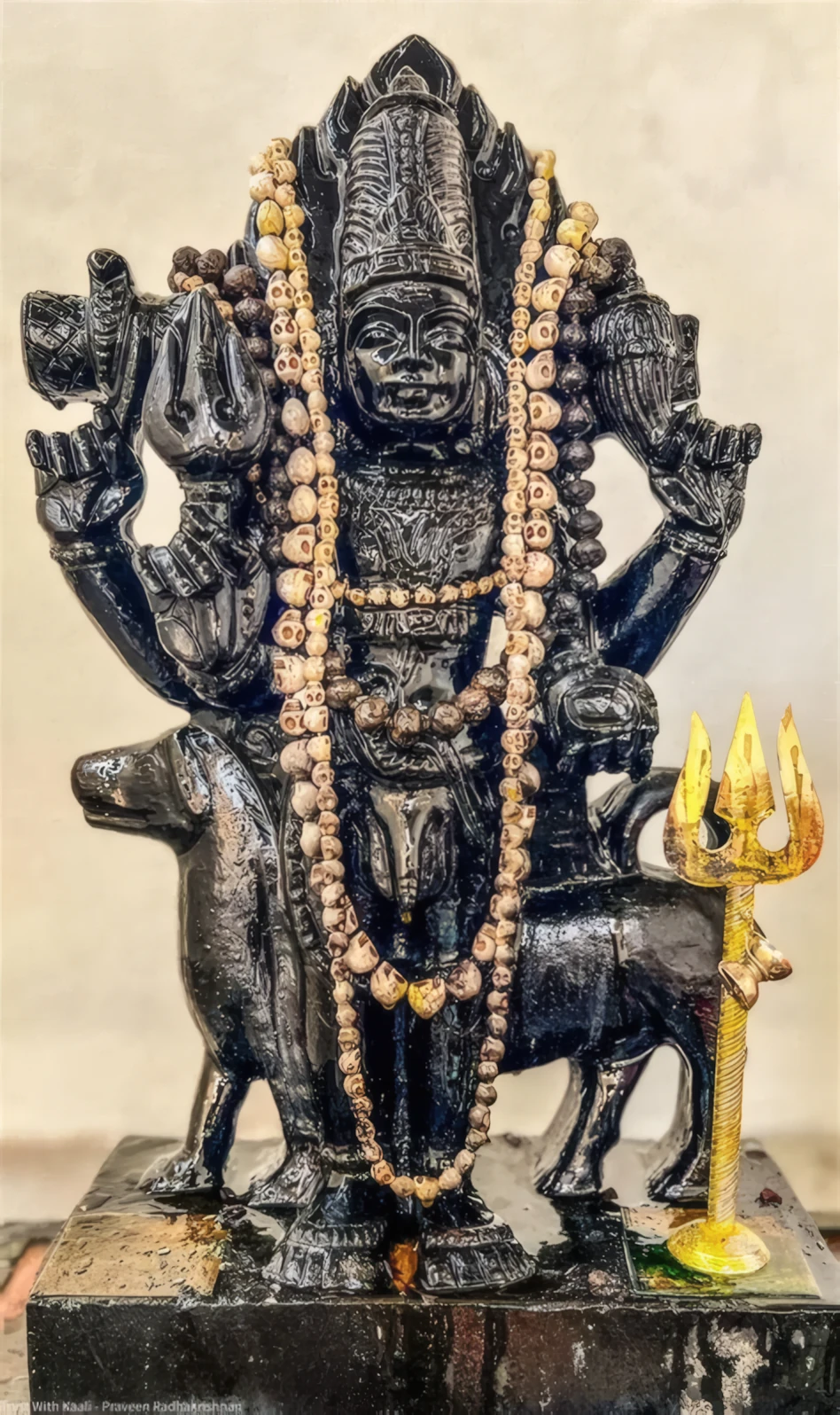
Adorned with matted locks charmingly intertwined with divine attributes.
The thirtieth name, Kaamaniya-Jata-Dharaya, shifts the focus to Bhairava's appearance, but not in a superficial way. His matted locks are a sign of tapas, mastery, and ascetic power. The name adds another note as well: beauty. Bhairava's wildness is not disorder. It carries its own radiance.
Elaboration
This name combines beauty, austerity, and the power associated with Shiva's ascetic form.
Beautiful Matted Locks
The term kaamaniya means beautiful, pleasing, or worthy of admiration, while jata refers to the matted locks of the ascetic. Together they suggest that Bhairava's yogic form is not merely severe. It is compelling in its own right. There is beauty in renunciation when it rests in truth.
The Mark of Tapasya
In Shaiva imagery, matted hair signifies withdrawal from ordinary worldly concerns and the concentration of spiritual force. Bhairava's locks therefore mark him as a supreme yogi, one whose power is gathered inwardly rather than displayed through ornament alone.
Wildness Held in Mastery
The jata also carry another meaning. They suggest the untamed forces of nature, but held within divine command. Bhairava is fierce without being chaotic. His form teaches that true mastery does not erase raw power; it disciplines it.
A Spiritual Reading
For the seeker, Kaamaniya-Jata-Dharaya reveals an unexpected harmony. The ascetic path is not barren. In Bhairava it becomes luminous, powerful, and strangely beautiful.
Spiritual Insight
Contemplating Kaamaniya-Jata-Dharaya reminds the seeker that spiritual discipline has its own beauty. Bhairava's matted locks signify austerity, mastery, and the radiance that comes from inward power.