Om Shri Gurubhyo Namah, Jai Ma Adya, Jai Khyapa Parampara.
16. Kapala-Karparotkrista-Bhiksa-Patra-Dharaya
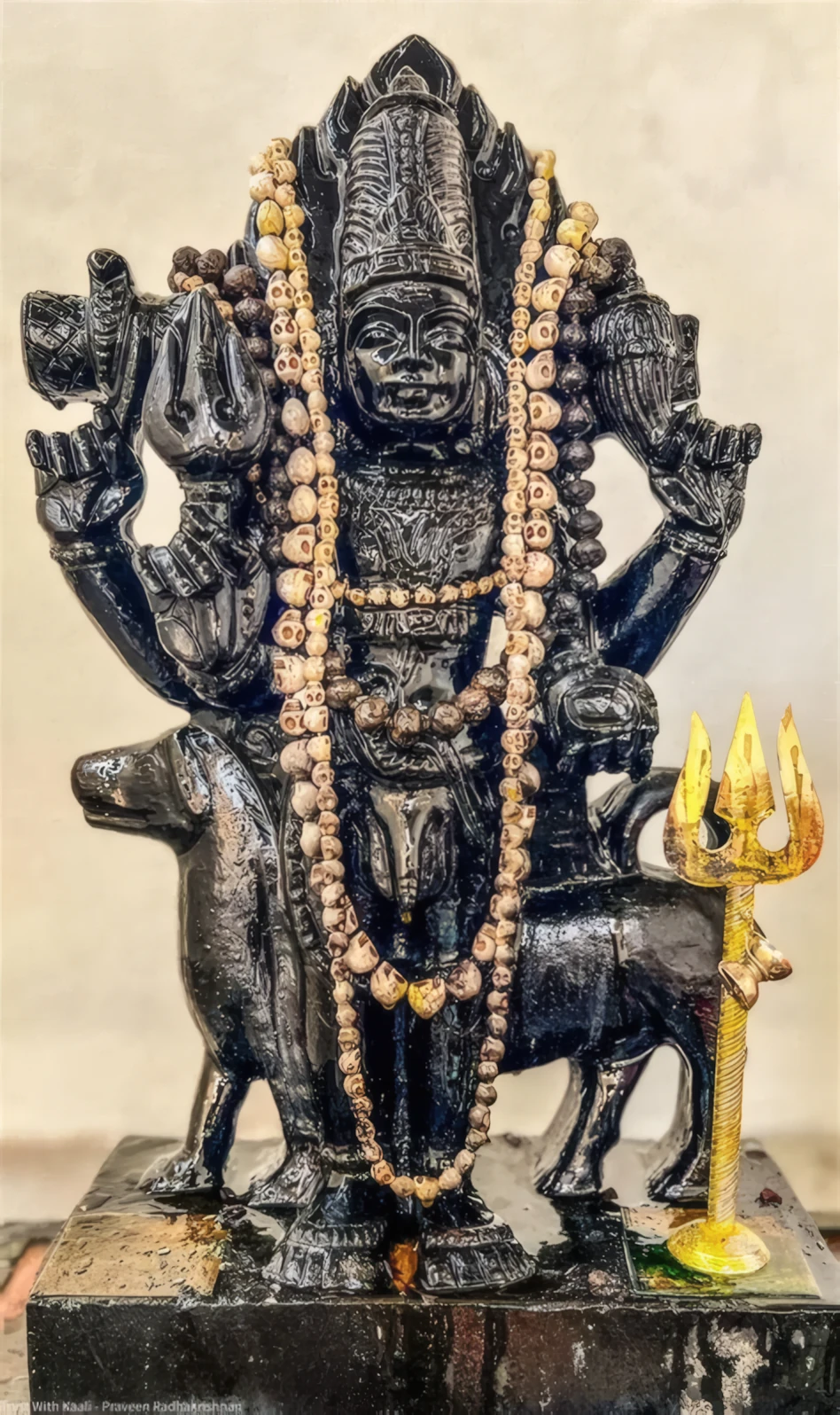
Holder of the Uplifted Skull-Bowl, Symbol of Renunciation.
The sixteenth name, Kapala-Karparotkrista-Bhiksa-Patra-Dharaya, lingers over one of Bhairava's most unsettling attributes: the skull-bowl raised as a vessel for alms. The image is severe, but it carries a disciplined spiritual logic. What the world fears, hides, or considers impure becomes, in Bhairava's hand, a sign of freedom from illusion.
Elaboration
This long compound elaborates Bhairava's iconography in detail: kapala, skull; karpara, skull-fragment or bowl; utkrista, uplifted; bhiksa-patra, alms vessel; dharaya, bearer. The name does not simply say that he carries a skull. It says he openly bears it as a sacred vessel.
The Skull-Bowl as Statement
In this form, the skull-bowl is not incidental. It is raised and visible. Bhairava does not conceal impermanence; he places it before the devotee. The gesture itself becomes a teaching.
The Renunciation It Represents
Used as a begging vessel, the skull signifies radical vairagya, detachment. It shows a being who has gone beyond ownership, status, and dependency on social approval. In the traditions that revere Bhairava, this severity is not nihilism. It is freedom from clinging.
The Fall of "I" and "Mine"
The severed skull also points to the breaking of ego. All the insistence of identity, all the noise of possession and self-importance, ends here. Bhairava holds that truth calmly. That is why the image is both fearsome and liberating.
Beyond Purity and Impurity
This name also signals transcendence of ordinary social division. Bhairava is not confined by conventional ideas of acceptable and unacceptable, pure and impure. He reveals the Divine even where the world refuses to look.
A Symbol of Freedom
For the seeker, the teaching is clear. To approach this form is to be asked what one still clings to, what one still fears, and what one still avoids seeing. The skull-bowl becomes a sign of moksha because it belongs to one who has nothing left to gain or lose.
Spiritual Insight
Contemplating Kapala-Karparotkrista-Bhiksa-Patra-Dharaya teaches fearless renunciation. In Bhairava's raised skull-bowl, the seeker is asked to surrender ego, accept impermanence, and seek the freedom that lies beyond social masks.